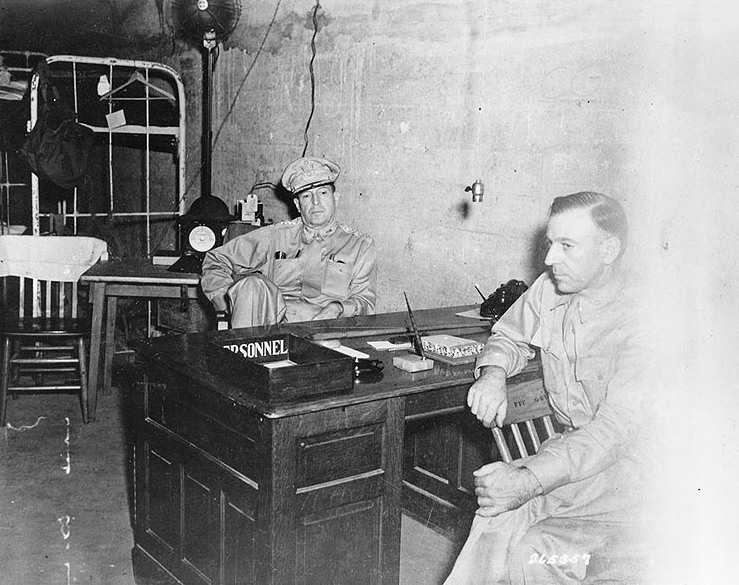
Roosevelt orders MacArthur to evacuate Philippines
Germany

Military
Politics
4 min read
Updated By: History Editorial Network (HEN)
Published:
Updated:
In the early stages of World War II, the Philippines faced a dire military situation as Japanese forces advanced rapidly across the Pacific. The American and Filipino troops, under the command of General Douglas MacArthur, were struggling to hold their positions against a well-coordinated Japanese offensive. The situation deteriorated as supply lines were cut and reinforcements were unable to reach the islands. Recognizing the impending collapse of American defenses, President Franklin D. Roosevelt made the critical decision to order MacArthur to evacuate. This order was not only a strategic withdrawal but also aimed at preserving the leadership that MacArthur represented for future military efforts in the Pacific. The evacuation was a complex operation, involving the relocation of military personnel and their families to Australia, where they could regroup and continue the fight against Japanese forces.
The impact of this order was profound, as it marked a significant shift in the American military strategy in the Pacific theater. The evacuation allowed for the preservation of key military leaders and resources, which would later contribute to the Allied counteroffensive. The loss of the Philippines was a significant blow to American morale, but it also galvanized public support for the war effort. The decision to evacuate was met with mixed reactions; while some viewed it as a necessary retreat, others saw it as a failure to defend American territory. Ultimately, this strategic withdrawal laid the groundwork for future operations, including the eventual liberation of the Philippines, which became a pivotal campaign in the broader context of the war in the Pacific.
#mooflife
#MomentOfLife
#Roosevelt
#Macarthur
#Philippines
#WorldWarIi
#JapaneseForces
Primary Reference
Douglas MacArthur

Explore the Life Moments of
 AI Twin