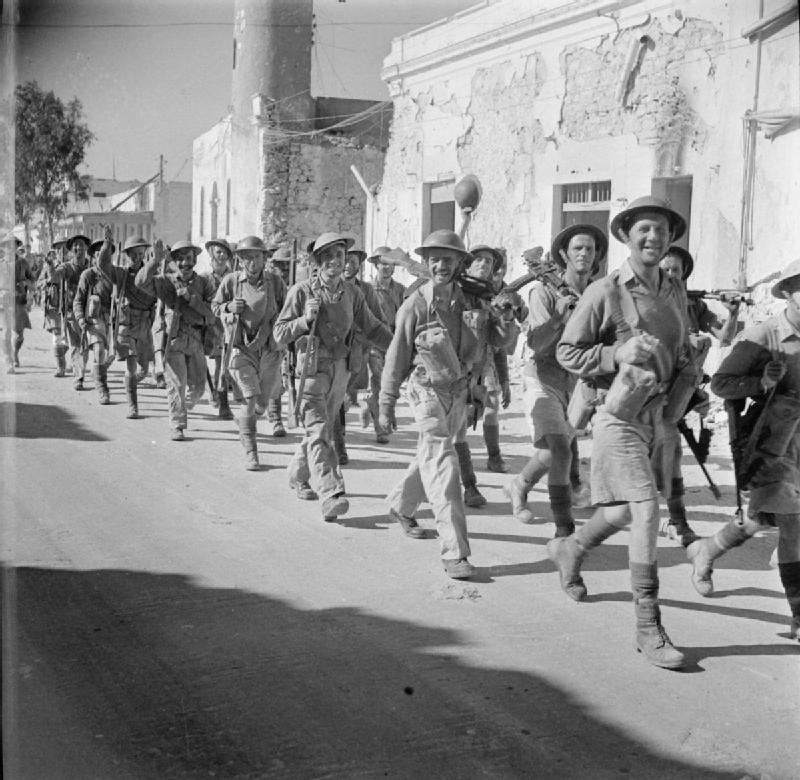
Rommel's offensive stalls at Tobruk
Germany
'%3e%3cpath fill='%23012169' d='M0 0v30h60V0z'/%3e%3cpath stroke='%23fff' stroke-width='6' d='m0 0 60 30m0-30L0 30'/%3e%3cpath stroke='%23C8102E' stroke-width='4' d='m0 0 60 30m0-30L0 30' clip-path='url(%23b)'/%3e%3cpath stroke='%23fff' stroke-width='10' d='M30 0v30M0 15h60'/%3e%3cpath stroke='%23C8102E' stroke-width='6' d='M30 0v30M0 15h60'/%3e%3c/g%3e%3c/svg%3e)

Military History
World War II
North African Campaign
3 min read
Updated By: History Editorial Network (HEN)
Published:
Updated:
Rommel's offensive at Tobruk faced significant challenges due to the determined resistance from British forces, particularly the 1st Armoured Division and the 7th Armoured Division, which were partially equipped with American Sherman tanks. The British defenses proved effective, preventing Rommel from advancing as he had planned. The situation was further complicated by the long supply lines that Rommel had to maintain, which were under constant threat from the 1st Free French Brigade Group stationed at Bir Hakeim. This strategic position allowed the Free French forces to disrupt Rommel's supply routes, adding to the difficulties faced by the Afrika Korps.
In an attempt to regain the initiative, Rommel ordered the creation of two lanes through the British minefields, which ran from Gazala to Bir Hakeim. This maneuver aimed to encircle the 150th Brigade of the British 50th Infantry Division, which was entrenched in the area known as 'the Cauldron.' The British command recognized the importance of this location, and it became the focal point of the battle in the following days. The combination of British resilience and the logistical challenges faced by Rommel ultimately stalled his offensive, marking a critical moment in the North African campaign.
#mooflife
#MomentOfLife
#Rommel
#Tobruk
#NorthAfricanCampaign
#BritishArmouredDivisions
#MilitaryStrategy
Primary Reference
7th Armoured Division (United Kingdom)

Explore the Life Moments of
 AI Twin