Rommel's Failed Attacks on Tobruk
Germany
'%3e%3cpath fill='%23012169' d='M0 0v30h60V0z'/%3e%3cpath stroke='%23fff' stroke-width='6' d='m0 0 60 30m0-30L0 30'/%3e%3cpath stroke='%23C8102E' stroke-width='4' d='m0 0 60 30m0-30L0 30' clip-path='url(%23b)'/%3e%3cpath stroke='%23fff' stroke-width='10' d='M30 0v30M0 15h60'/%3e%3cpath stroke='%23C8102E' stroke-width='6' d='M30 0v30M0 15h60'/%3e%3c/g%3e%3c/svg%3e)


'/%3e%3c/defs%3e%3cpath fill='%23012169' d='M0 0h10080v5040H0z'/%3e%3cpath stroke='%23fff' stroke-width='.6' d='m0 0 6 3m0-3L0 3' clip-path='url(%23b)' transform='scale(840)'/%3e%3cpath stroke='%23e4002b' stroke-width='.4' d='m0 0 6 3m0-3L0 3' clip-path='url(%23c)' transform='scale(840)'/%3e%3cpath stroke='%23fff' stroke-width='840' d='M2520 0v2520M0 1260h5040'/%3e%3cpath stroke='%23e4002b' stroke-width='504' d='M2520 0v2520M0 1260h5040'/%3e%3cg fill='%23fff'%3e%3cuse xlink:href='%23d' x='2520' y='3780'/%3e%3cuse xlink:href='%23a' x='7560' y='4200'/%3e%3cuse xlink:href='%23a' x='6300' y='2205'/%3e%3cuse xlink:href='%23a' x='7560' y='840'/%3e%3cuse xlink:href='%23a' x='8680' y='1869'/%3e%3cuse xlink:href='%23e' x='8064' y='2730'/%3e%3c/g%3e%3c/svg%3e)
Military
World War II
3 min read
Updated By: History Editorial Network (HEN)
Published:
Updated:
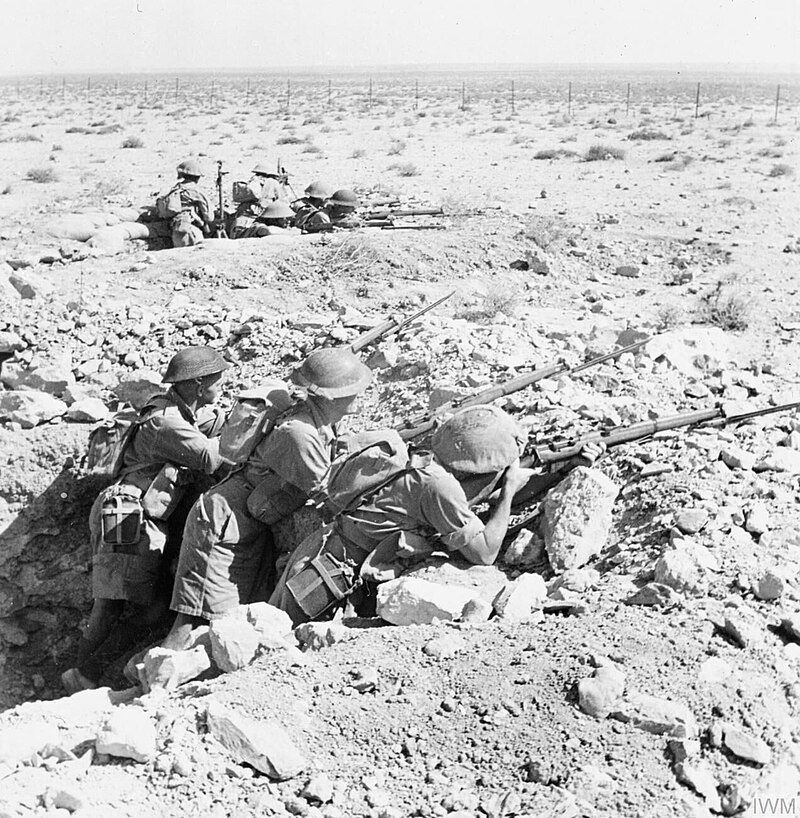
Rommel's attempts to capture Tobruk were marked by a series of failed assaults that highlighted the challenges faced by Axis forces in North Africa. The initial attack on Tobruk was met with strong resistance, forcing Rommel to retreat. Subsequent attempts on the 16th and 30th also ended in failure, demonstrating the resilience of the Allied defenses. Tobruk was a key strategic location, serving as a vital supply port for the Allies and a significant obstacle for Axis ambitions in the region. The inability to secure Tobruk not only stalled Rommel's advance but also allowed Allied forces to regroup and strengthen their positions in North Africa. Meanwhile, the German LSSAH Panzer division achieved a tactical victory by capturing the Kleisoura Pass, which disrupted the retreat of the Greek army in Albania. This maneuver showcased the German military's ability to execute strategic operations, even as their efforts to take Tobruk faltered. The combination of failed assaults on Tobruk and successful operations elsewhere illustrated the complexities of warfare during this period, where victories in one area did not necessarily translate to overall success in the campaign.
#mooflife
#MomentOfLife
#Rommel
#Tobruk
#NorthAfricaCampaign
#WorldWarIi
#GermanMilitaryStrategy
Primary Reference
Siege of Tobruk

Explore the Life Moments of
 AI Twin