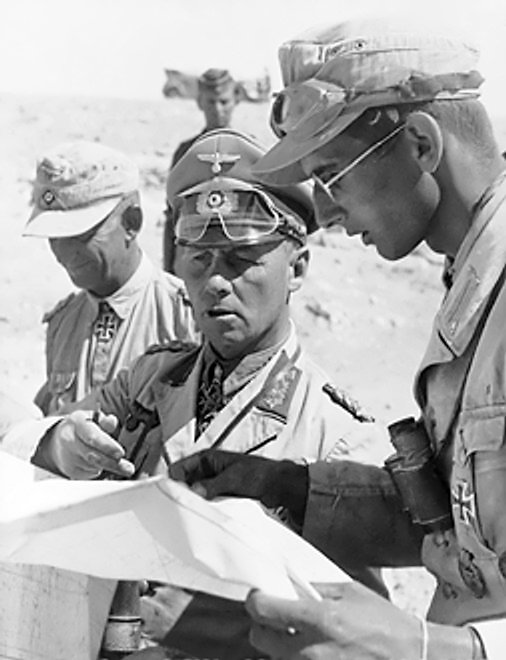
Rommel begins Spring offensive at Gazala
Germany

Military History
World War II
North African Campaign
4 min read
Updated By: History Editorial Network (HEN)
Published:
Updated:
The Spring offensive at Gazala marked a pivotal moment in the North African Campaign during World War II. Initiated by German General Erwin Rommel, the offensive targeted the Gazala line, strategically located west of Tobruk. The operation commenced with a maneuver known as 'Rommel's Moonlight Ride,' which involved a rapid mechanized movement around the positions held by the 1st Free French Brigade Group at Bir Hakeim. This operation took place under the cover of darkness, specifically during the night of 26/27 May, allowing Rommel's forces to catch the British and their allies off guard. The offensive was characterized by its speed and surprise, leading to the dispersal of the 3rd Indian Motorized Brigade, resulting in the capture of approximately six hundred soldiers, who were subsequently released in the desert.
The Gazala offensive continued for several weeks, culminating in a decisive victory for Rommel's Afrika Korps. This success not only solidified Axis control over the region but also significantly weakened Allied positions in North Africa. The offensive's impact was felt across the theater, as it shifted the balance of power and set the stage for further engagements, including the eventual siege of Tobruk. The tactics employed during this campaign, particularly the use of mechanized forces and surprise attacks, would influence military strategies in subsequent battles. The Gazala offensive is often studied for its operational effectiveness and the lessons learned regarding mobility and the element of surprise in warfare.
#mooflife
#MomentOfLife
#Rommel
#GazalaOffensive
#NorthAfricanCampaign
#WorldWarIi
#MilitaryStrategy
Primary Reference
Battle of Gazala

Explore the Life Moments of
 AI Twin