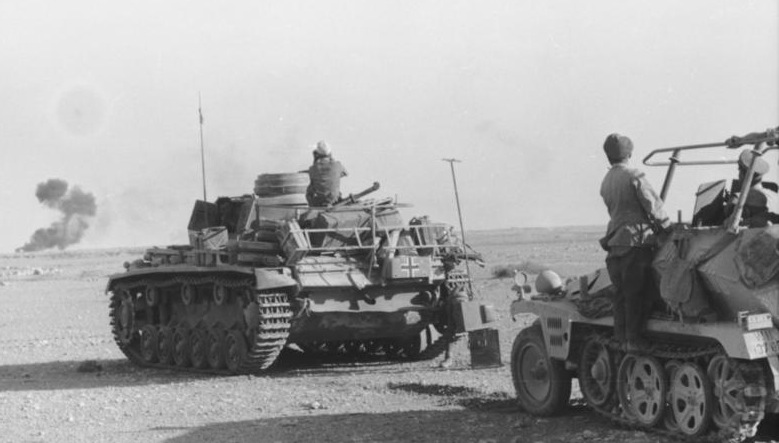
Rommel attacks Gazala defence line
Germany
Military History
World War II
North African Campaign
4 min read
Updated By: History Editorial Network (HEN)
Published:
Updated:
The Gazala defense line was a crucial fortification established by Commonwealth forces in North Africa during World War II. It was designed to protect against Axis advances, particularly from the German Afrika Korps led by General Erwin Rommel. The line was strategically important as it served as a barrier to safeguard key supply routes and the port of Tobruk, which was vital for the Allied war effort in the region. Rommel's forces had already achieved notable victories, including a significant win at Halfaya Pass, which bolstered their momentum as they prepared to launch an offensive against the Gazala line. The attack on the Gazala defense line marked a pivotal moment in the North African campaign, as it represented a direct challenge to the Commonwealth's defensive strategy and highlighted the growing threat posed by Axis forces in the region.
The assault on the Gazala line involved a combination of armored and infantry units, showcasing Rommel's tactical prowess in mobile warfare. Despite the initial success in breaching the defenses, the port of Tobruk remained under Commonwealth control, creating a complex situation for both sides. The battle for Gazala would ultimately lead to a series of engagements that would shape the course of the North African campaign. The outcome of these confrontations had far-reaching implications, influencing supply lines, troop morale, and the overall strategic landscape of the war in North Africa. The Gazala line's defense was critical in delaying Axis advances, but the pressure mounted as Rommel's forces continued to exploit weaknesses in the Commonwealth's positions.
#mooflife
#MomentOfLife
#Rommel
#GazalaDefenseLine
#NorthAfricaCampaign
#WorldWarIi
#Tobruk
Primary Reference
Battle of Gazala

Explore the Life Moments of
 AI Twin