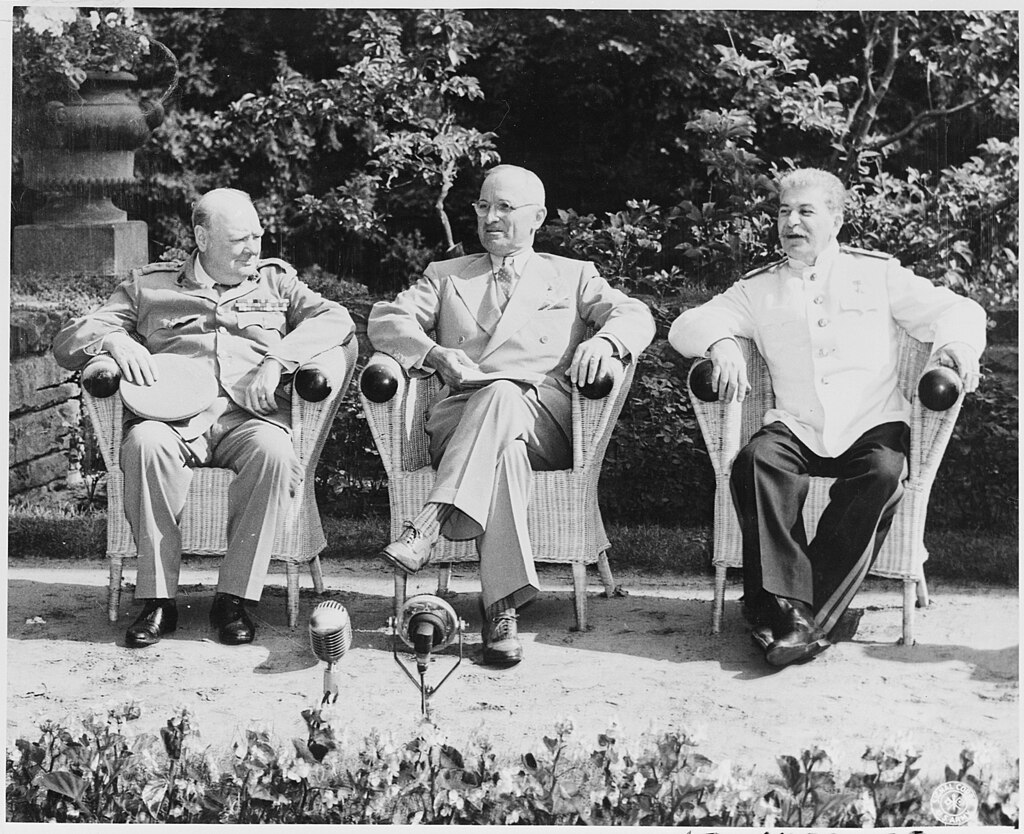
Potsdam Conference
Germany
4 min read
Updated By: History Editorial Network (HEN)
Published:
Updated:
The Potsdam Conference was held from 17 July to 2 August 1945 in Potsdam, near Berlin, bringing together the Allied leaders to determine the postwar order in Europe and the ongoing conduct of the war against Japan. The participants were Joseph Stalin of the Soviet Union, Harry S. Truman of the United States—who had assumed the presidency following Franklin D. Roosevelt’s death in April—and Winston Churchill of the United Kingdom, later replaced by Clement Attlee after the Labour Party’s election victory during the conference.
Key issues included the administration and occupation of defeated Germany. The Allies confirmed the division of Germany and Berlin into four zones of occupation, agreed to demilitarization and denazification policies, and discussed reparations, with the Soviet Union receiving significant shares from its own zone and from Western zones. The conference also addressed the future of Eastern Europe, where Stalin’s growing influence raised concerns among the Western powers.
On 26 July, the United States, Britain, and China issued the Potsdam Declaration, demanding Japan’s unconditional surrender and warning of “prompt and utter destruction” if it refused—language that foreshadowed the use of atomic weapons. Stalin, though not a signatory, was informed privately of the new weapon following the successful Trinity test earlier that month.
The Potsdam Conference highlighted both Allied cooperation in managing the immediate postwar world and the growing divisions that would soon lead to the Cold War. It represented the final major summit of the wartime Allies before their alliance gave way to geopolitical rivalry.
#MomentsOfLife #MoofLife_Moment #MoofLife #WWII #PotsdamConference #BigThree #PostwarOrder #Germany1945 #JapanSurrender
Primary Reference
Potsdam Conference

Explore the Life Moments of
 AI Twin