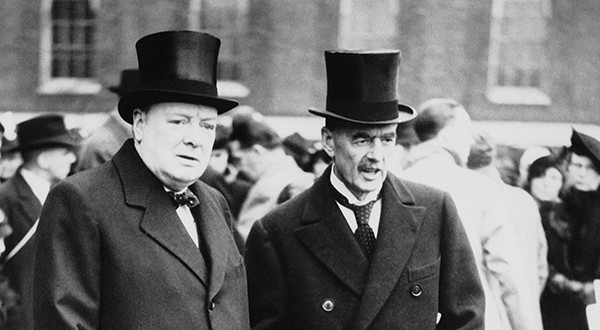
Neville Chamberlain Resigns from Commons for Health
Germany
'%3e%3cpath fill='%23012169' d='M0 0v30h60V0z'/%3e%3cpath stroke='%23fff' stroke-width='6' d='m0 0 60 30m0-30L0 30'/%3e%3cpath stroke='%23C8102E' stroke-width='4' d='m0 0 60 30m0-30L0 30' clip-path='url(%23b)'/%3e%3cpath stroke='%23fff' stroke-width='10' d='M30 0v30M0 15h60'/%3e%3cpath stroke='%23C8102E' stroke-width='6' d='M30 0v30M0 15h60'/%3e%3c/g%3e%3c/svg%3e)
Politics
3 min read
Updated By: History Editorial Network (HEN)
Published:
Updated:
Neville Chamberlain's resignation from the House of Commons was a pivotal moment in British politics, primarily driven by health concerns. Chamberlain, who had served as Prime Minister during a tumultuous period marked by the early stages of World War II, faced increasing pressure and criticism regarding his policies and decisions. His leadership style and approach to appeasement, particularly towards Nazi Germany, had been contentious, leading to a decline in public and political support. The resignation signified a shift in the political landscape, as it opened the door for Winston Churchill, a prominent critic of Chamberlain's policies, to take the helm of the Conservative Party. Churchill's election was seen as a response to the urgent need for a more robust and aggressive stance against the Axis powers, reflecting a growing consensus among the British public and political elite for a change in leadership during a critical time in the war. This transition marked the beginning of a new chapter in British wartime leadership, with Churchill's determination and rhetoric rallying the nation in the face of adversity. The impact of Chamberlain's resignation extended beyond immediate political changes; it also influenced military strategies and public morale as Britain faced the challenges of the war head-on.
#mooflife
#MomentOfLife
#NevilleChamberlain
#WinstonChurchill
#BritishPolitics
#WorldWarIi
#PoliticalResignation
Primary Reference
Winston Churchill

Explore the Life Moments of
 AI Twin