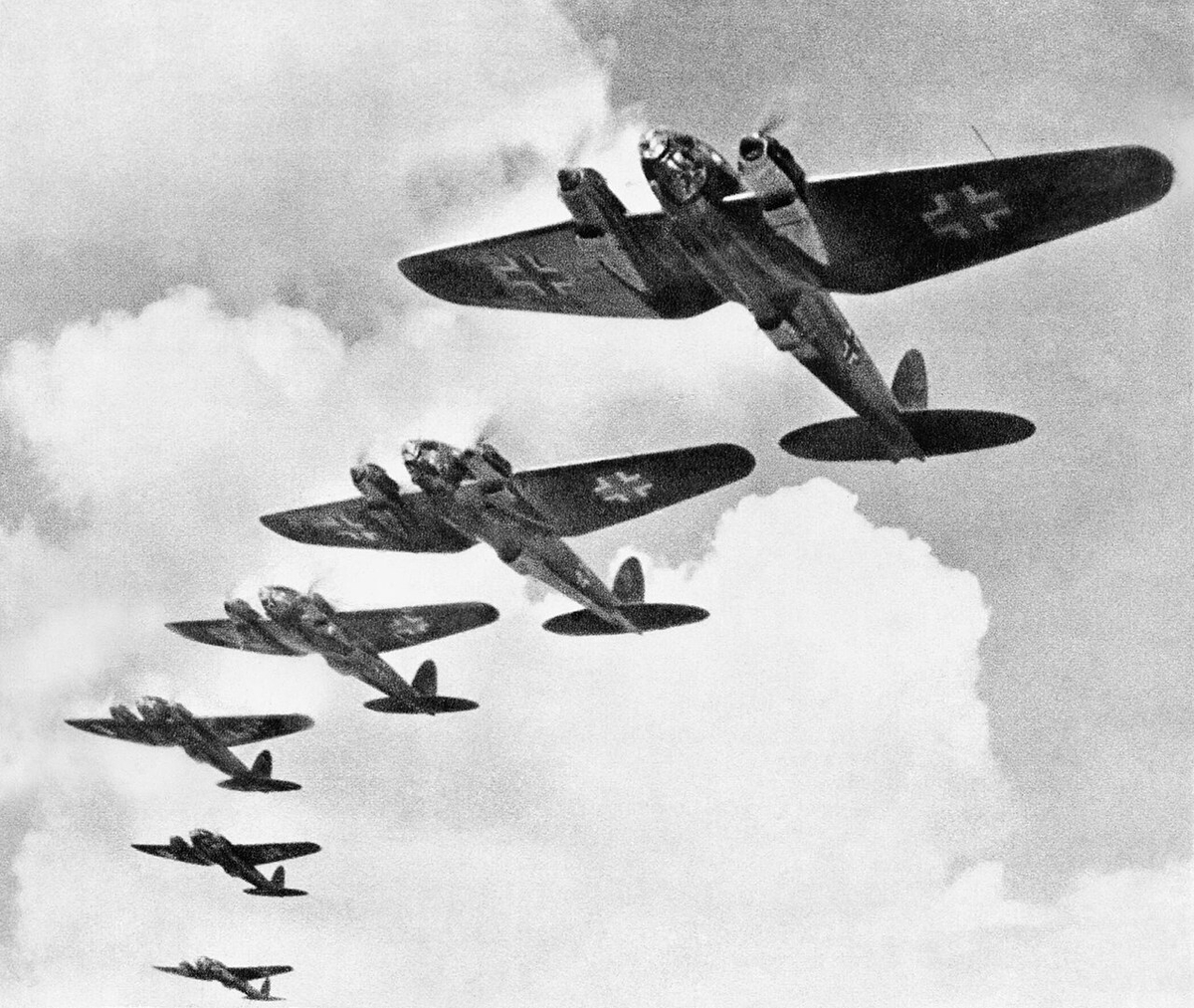
Luftwaffe attacks on British airfields continue
Germany

'%3e%3cpath fill='%23012169' d='M0 0v30h60V0z'/%3e%3cpath stroke='%23fff' stroke-width='6' d='m0 0 60 30m0-30L0 30'/%3e%3cpath stroke='%23C8102E' stroke-width='4' d='m0 0 60 30m0-30L0 30' clip-path='url(%23b)'/%3e%3cpath stroke='%23fff' stroke-width='10' d='M30 0v30M0 15h60'/%3e%3cpath stroke='%23C8102E' stroke-width='6' d='M30 0v30M0 15h60'/%3e%3c/g%3e%3c/svg%3e)
Military History
World War II
Aviation Warfare
4 min read
Updated By: History Editorial Network (HEN)
Published:
Updated:
The Luftwaffe's sustained attacks on British airfields and London marked a critical phase in the aerial conflict during World War II. These operations aimed to weaken Britain's air defense capabilities and disrupt military logistics. The Luftwaffe, the aerial warfare branch of the German Wehrmacht, targeted key airfields to destroy British aircraft on the ground and to gain air superiority. Despite the intensity of these assaults, the effectiveness of the attacks on radar installations was notably low, indicating that British radar technology was resilient and played a crucial role in detecting incoming threats. This resilience allowed the Royal Air Force (RAF) to respond more effectively to Luftwaffe incursions, contributing to the overall defense strategy of Britain.
The impact of these airfield attacks extended beyond immediate military objectives. The sustained bombing campaigns instilled fear among the civilian population and disrupted daily life in London and surrounding areas. The Royal Navy also faced challenges during this period, as evidenced by the sinking of two destroyers off the Dutch coast, an event known as the Texel Disaster. This incident highlighted the vulnerabilities faced by British naval forces amidst the broader conflict. Overall, the Luftwaffe's operations against British airfields were part of a larger strategy to achieve dominance in the air, which ultimately influenced the course of the war and the tactics employed by both sides in the ongoing conflict.
#mooflife
#MomentOfLife
#Luftwaffe
#BritishAirfields
#WorldWarIi
#Raf
#AerialWarfare
Primary Reference
Battle of Britain

Explore the Life Moments of
 AI Twin