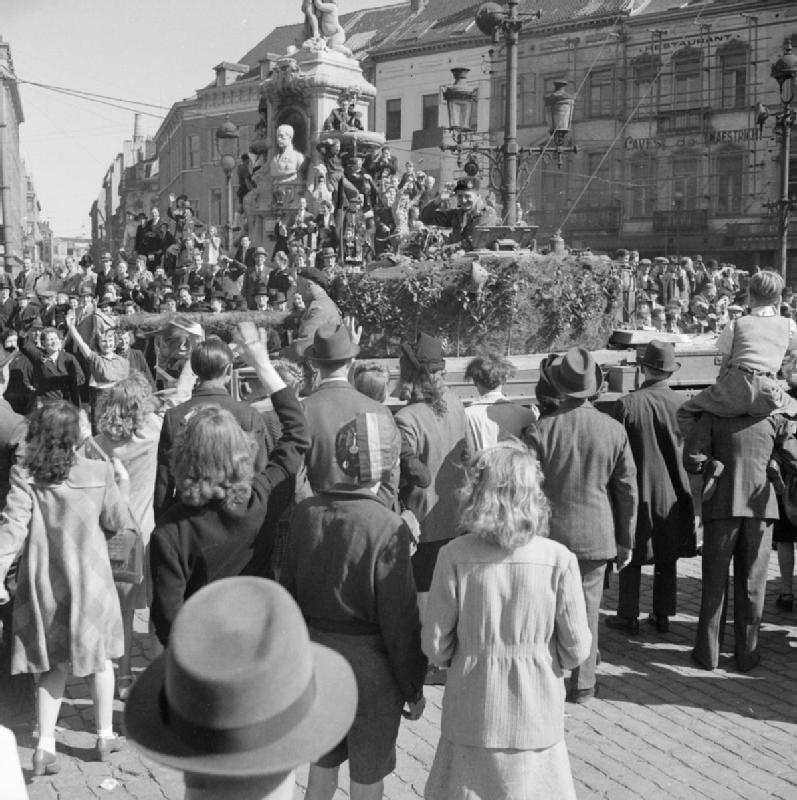
Liberation of Brussels by Allied forces
Germany

4 min read
Updated By: History Editorial Network (HEN)
Published:
On 3 September 1944, Brussels, the capital of Belgium, was liberated by Allied forces during the rapid advance following the breakout from Normandy. The liberation was carried out primarily by the British Guards Armoured Division, part of General Brian Horrocks’s XXX Corps, advancing under Field Marshal Bernard Montgomery’s 21st Army Group. After weeks of heavy fighting in France, the drive into Belgium proceeded with remarkable speed, as German forces were in retreat and unable to mount organized resistance.
Brussels was entered without major battle. German units withdrew hastily, and Allied troops were welcomed enthusiastically by the population, which had endured four years of occupation since May 1940. The liberation of the Belgian capital had both symbolic and strategic importance. Politically, it restored national authority to a key European state, while militarily it secured vital transport routes needed for the continued Allied advance into the Low Countries and toward Germany.
The success at Brussels was part of a broader Allied effort to exploit German weakness after the collapse in Normandy, culminating in the capture of Antwerp the following day. However, logistical challenges soon emerged, as the speed of the advance stretched supply lines. While Brussels was quickly secured, the necessity of opening ports and maintaining momentum would shape subsequent operations, including the ill-fated Operation Market Garden later in September.
The liberation of Brussels marked a significant milestone in the liberation of Western Europe, symbolizing both the collapse of German control and the rapid Allied progress toward the German frontier.
#MomentsOfLife #MoofLife_Moment #MoofLife #WWII #LiberationOfBrussels #Belgium1944 #WesternFront #AlliedAdvance

Explore the Life Moments of
 AI Twin