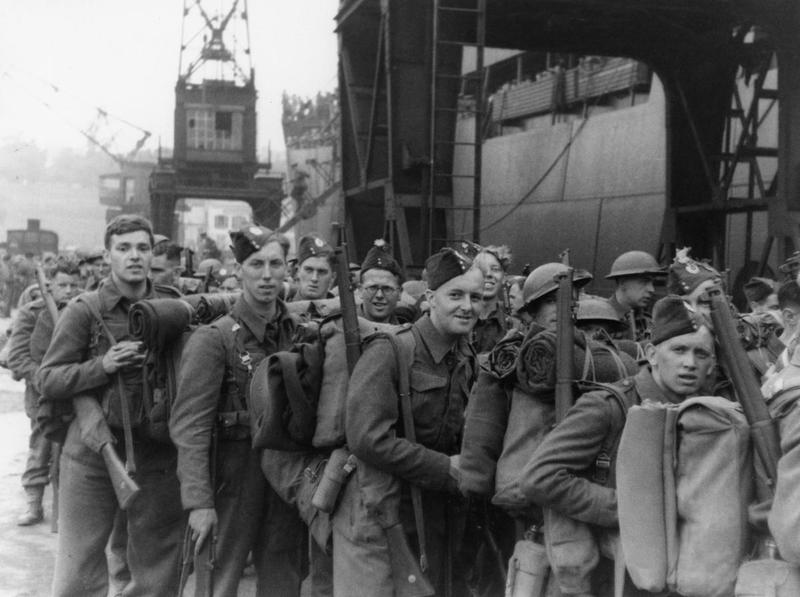
Last day of Operation Dynamo
Germany
'%3e%3cpath fill='%23012169' d='M0 0v30h60V0z'/%3e%3cpath stroke='%23fff' stroke-width='6' d='m0 0 60 30m0-30L0 30'/%3e%3cpath stroke='%23C8102E' stroke-width='4' d='m0 0 60 30m0-30L0 30' clip-path='url(%23b)'/%3e%3cpath stroke='%23fff' stroke-width='10' d='M30 0v30M0 15h60'/%3e%3cpath stroke='%23C8102E' stroke-width='6' d='M30 0v30M0 15h60'/%3e%3c/g%3e%3c/svg%3e)


Military History
World War II
Evacuations
4 min read
Updated By: History Editorial Network (HEN)
Published:
Updated:
Operation Dynamo, the code name for the Dunkirk evacuation, marked a crucial military operation during World War II. The operation aimed to evacuate Allied soldiers from the beaches of Dunkirk, France, as German forces advanced. By the conclusion of the operation, a total of 224,686 British troops and 121,445 French and Belgian soldiers had been successfully evacuated. This large-scale evacuation was facilitated by a diverse fleet of military and civilian vessels, which braved enemy fire and challenging conditions to rescue the stranded troops. The operation not only saved a significant number of soldiers but also provided a morale boost to the Allied forces at a time when the situation appeared dire. The successful evacuation allowed for the reorganization of British forces and contributed to the eventual resistance against German advances in Europe.
The impact of Operation Dynamo extended beyond the immediate military outcomes. The evacuation was a pivotal moment in the early stages of World War II, demonstrating the resilience and determination of the Allied forces. Winston Churchill's subsequent speeches, including the famous declaration of unwavering resistance, galvanized public support and reinforced the commitment to continue fighting against Nazi Germany. The operation also highlighted the strategic importance of Dunkirk and the need for effective military planning in the face of overwhelming odds. The successful evacuation is often regarded as a turning point, as it allowed the Allies to regroup and prepare for future engagements, ultimately contributing to the long-term efforts to defeat Axis powers.
#mooflife
#MomentOfLife
#OperationDynamo
#DunkirkEvacuation
#WorldWarIi
#AlliedForces
#MilitaryHistory
Primary Reference
Dunkirk evacuation

Explore the Life Moments of
 AI Twin