Japanese Capture of Lashio in Burma
Germany

Military
World War II
4 min read
Updated By: History Editorial Network (HEN)
Published:
Updated:
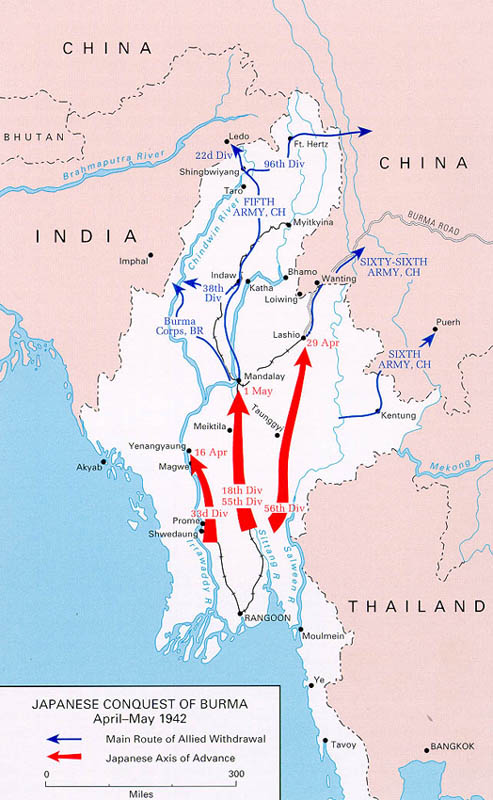
The capture of Lashio in Burma marked a pivotal moment in the Japanese campaign during World War II. Lashio served as a critical junction for the Burma Road, which was the primary supply route for the Allies to support Chinese forces fighting against Japan. By cutting off this vital supply line, Japanese forces significantly hampered the ability of the Allies to provide necessary resources and reinforcements to their troops in China. The strategic importance of Lashio was underscored by its location, as it connected the British-controlled territories in Burma with the Chinese front, making it a key target for Japanese military operations. The successful capture of Lashio not only disrupted Allied logistics but also facilitated further Japanese advances into Burma, allowing them to consolidate their control over the region and threaten British positions in India.
The impact of the Japanese capture of Lashio extended beyond immediate military gains. It represented a broader strategy by Japan to expand its influence in Southeast Asia and cut off Allied support to China. The loss of the Burma Road had dire consequences for the Chinese Nationalist forces, who relied heavily on supplies from the Allies. As a result, the capture of Lashio contributed to a prolonged period of hardship for Chinese troops, who faced increasing challenges in their fight against Japanese aggression. The event also highlighted the vulnerability of Allied positions in the region, prompting a reevaluation of military strategies and resource allocation. Overall, the capture of Lashio was a significant tactical victory for Japan, with lasting implications for the course of the war in Asia.
#mooflife
#MomentOfLife
#JapaneseCaptureOfLashio
#BurmaRoad
#WorldWarIi
#AlliedSupplyLines
#SoutheastAsiaMilitaryStrategy
Primary Reference
Japanese invasion of Burma

Explore the Life Moments of
 AI Twin