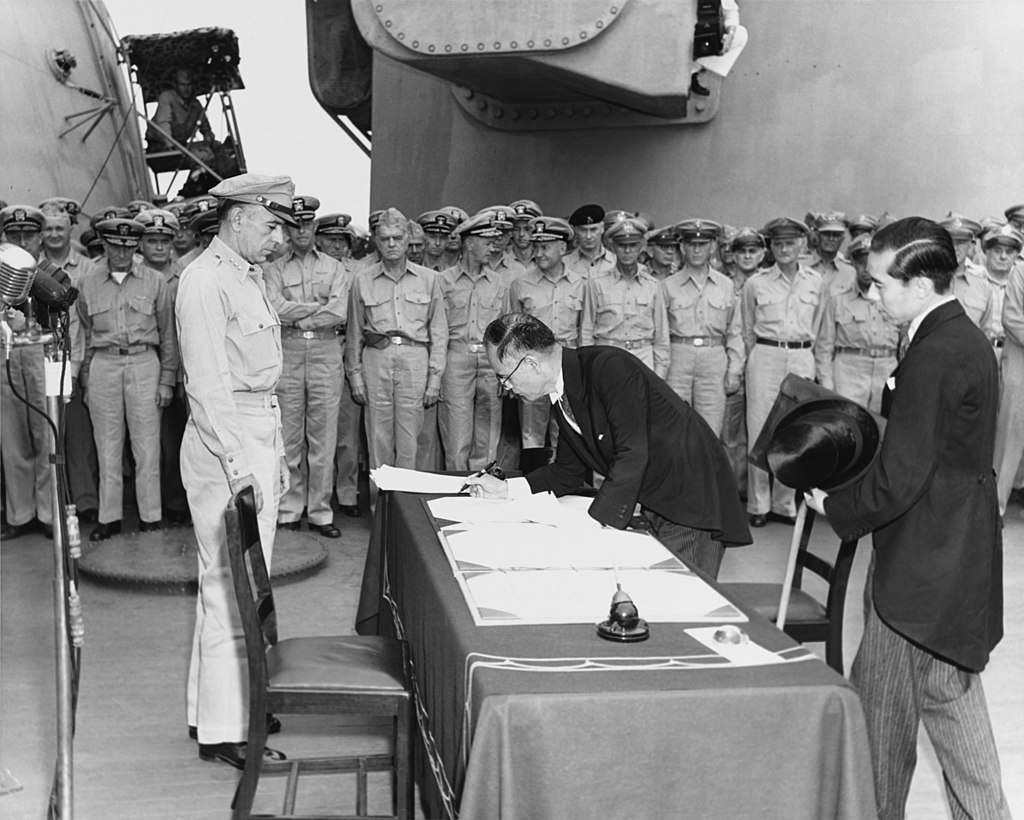
Japan announces surrender
Germany

4 min read
Updated By: History Editorial Network (HEN)
Published:
On 15 August 1945, Japan announced its surrender to the Allied powers, effectively bringing the Second World War to an end. The decision followed a series of catastrophic developments, including the atomic bombings of Hiroshima on 6 August and Nagasaki on 9 August, as well as the Soviet Union’s declaration of war and invasion of Manchuria on 8–9 August. Faced with overwhelming military setbacks and the prospect of continued destruction, Emperor Hirohito intervened to break a deadlock within the Japanese Supreme War Council.
In a recorded radio address broadcast to the Japanese people, known as the Gyokuon-hōsō (“Jewel Voice Broadcast”), Hirohito stated Japan’s acceptance of the terms of the Potsdam Declaration, issued by the Allies on 26 July 1945. While the Emperor did not use the word “surrender,” he acknowledged that the war had not developed in Japan’s favor and that further resistance would only bring ruin to the nation. For many Japanese citizens, it was the first time they had ever heard the Emperor’s voice.
The announcement marked the first unconditional surrender of Japan in its history and the conclusion of hostilities in the Pacific Theater. Formal documents of surrender were signed aboard the USS Missouri in Tokyo Bay on 2 September 1945, officially ending World War II. Japan’s surrender reshaped the geopolitical order in East Asia, led to Allied occupation and reforms, and initiated the postwar reconstruction period.
#MomentsOfLife #MoofLife_Moment #MoofLife #WWII #JapanSurrender #EndOfWar #PacificWar
Primary Reference
Victory over Japan Day

Explore the Life Moments of
 AI Twin