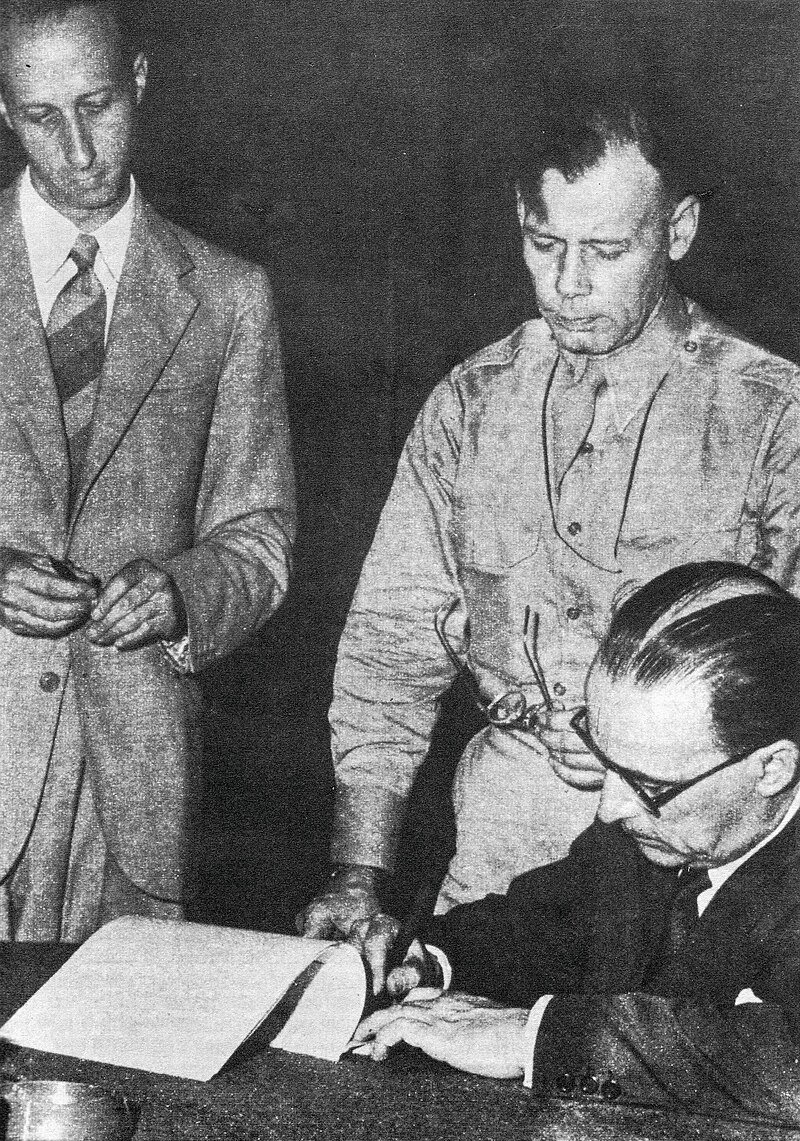
Italy Signs Secret Armistice and Exits War
Germany
World War II
Military
4 min read
Updated By: History Editorial Network (HEN)
Published:
Updated:
The secret armistice signed by Italy marked a pivotal shift in the dynamics of World War II. This agreement allowed Italy to exit the conflict, which had seen the country aligned with the Axis powers alongside Germany and Japan. The decision to withdraw was influenced by various factors, including military defeats and the changing political landscape within Italy. The armistice was not publicly announced, leading to confusion and uncertainty among both Italian forces and their German allies. Following the signing, the British XXIII Corps launched an invasion of mainland Italy, landing at Reggio Calabria. This operation was part of the Allied strategy to weaken Axis control in Europe and establish a foothold in Italy, which was seen as a critical step towards liberating the continent from fascist rule.
The impact of Italy's exit from the war was significant. It not only altered the course of military operations in the Mediterranean but also led to the subsequent occupation of Italy by German forces, who sought to maintain control over the region. The armistice and the subsequent invasion resulted in a complex situation where Italian troops were often caught between the advancing Allies and the retreating Germans. This period saw a rise in resistance movements within Italy, as various factions sought to oppose both German occupation and the remnants of the fascist regime. The armistice ultimately contributed to the broader Allied efforts to defeat the Axis powers, reshaping the geopolitical landscape of Europe and setting the stage for future military engagements.
#mooflife
#MomentOfLife
#ItalianArmistice
#WorldWarIi
#AlliedInvasion
#AxisPowers
#MilitaryHistory
Primary Reference
Armistice of Cassibile

Explore the Life Moments of
 AI Twin