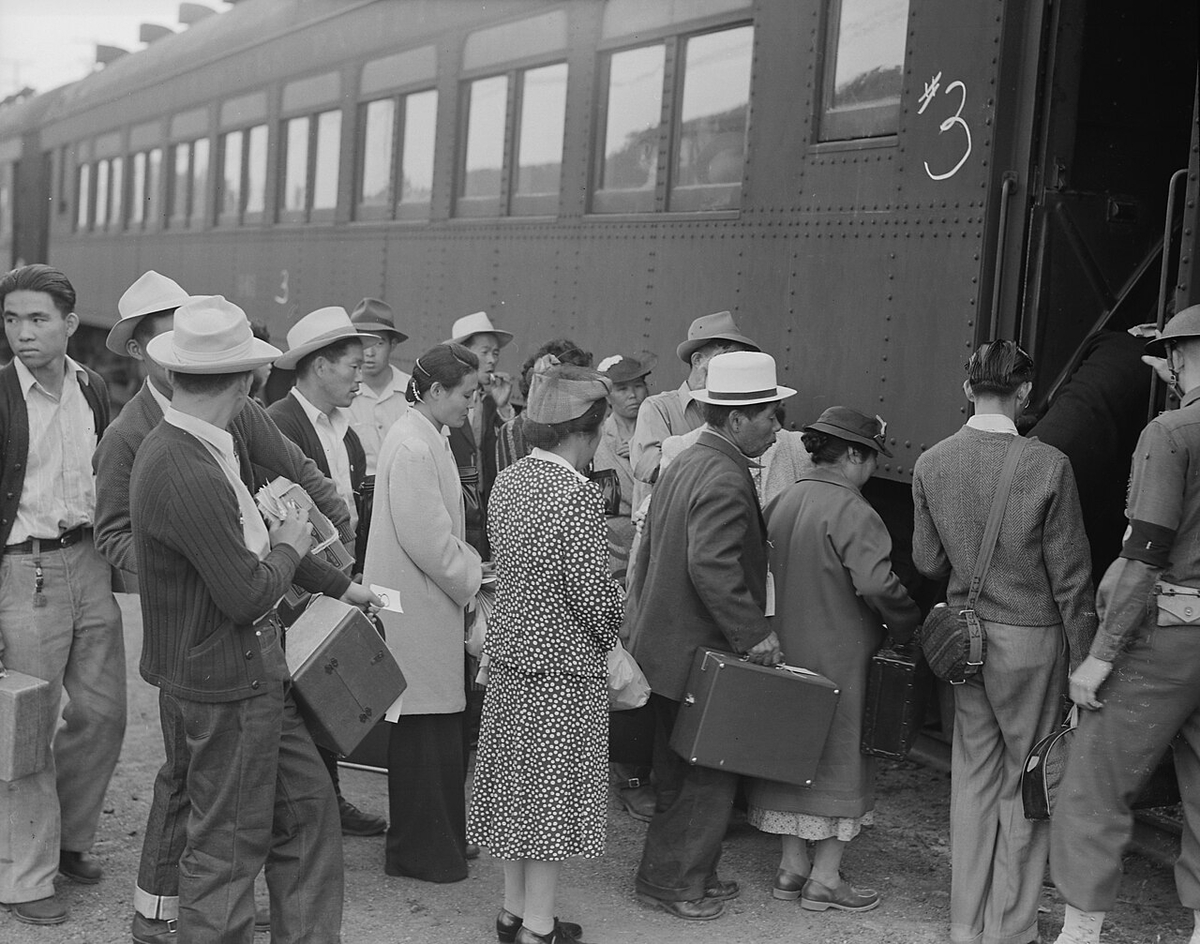
Internment of Japanese-Americans During War
Germany

Civil Rights
World War II
3 min read
Updated By: History Editorial Network (HEN)
Published:
Updated:
The internment of Japanese-Americans during wartime was a response to growing fears of national security following the attack on Pearl Harbor. The U.S. government, influenced by racial prejudice and wartime hysteria, viewed Japanese-Americans as potential threats. This led to the forced relocation and incarceration of around 120,000 individuals of Japanese descent, two-thirds of whom were American citizens. The internment was justified by the government as a necessary measure to prevent espionage and sabotage, despite a lack of evidence supporting these claims. The internment camps were established in remote areas, where families were often housed in inadequate conditions, stripped of their rights and properties. The impact of this policy was profound, leading to long-lasting psychological and economic effects on the Japanese-American community. Many lost their homes, businesses, and livelihoods, and the stigma associated with their internment persisted for generations. The internment is now widely recognized as a violation of civil liberties, and it has prompted discussions about the balance between national security and individual rights, especially during times of crisis. In later years, the U.S. government formally acknowledged the injustice of the internment, leading to reparations for survivors and their families, as well as a commitment to prevent similar actions in the future.
#mooflife
#MomentOfLife
#Japanese-americanInternment
#CivilLiberties
#WorldWarIi
#RacialPrejudice
#NationalSecurity
Primary Reference
Internment of Japanese Americans

Explore the Life Moments of
 AI Twin