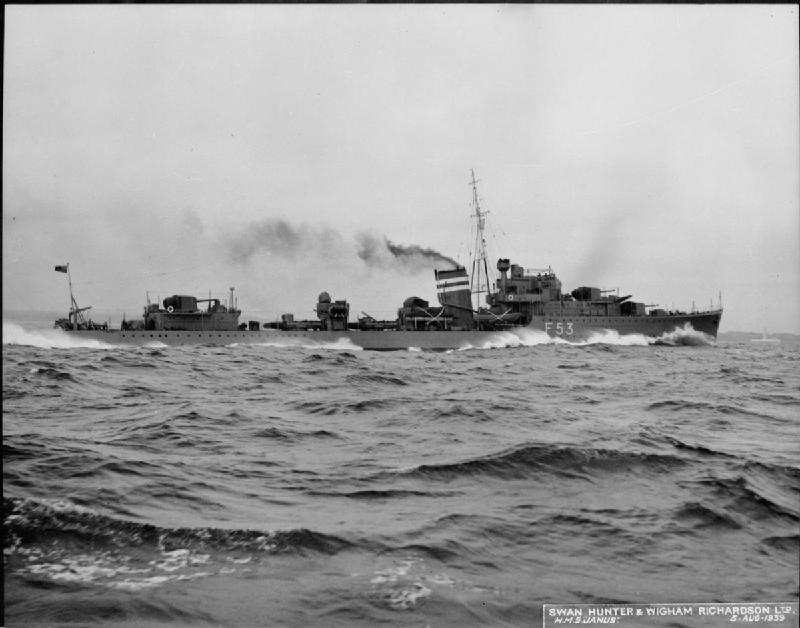
HMS Janus sunk off Anzio
Germany
'%3e%3cpath fill='%23012169' d='M0 0v30h60V0z'/%3e%3cpath stroke='%23fff' stroke-width='6' d='m0 0 60 30m0-30L0 30'/%3e%3cpath stroke='%23C8102E' stroke-width='4' d='m0 0 60 30m0-30L0 30' clip-path='url(%23b)'/%3e%3cpath stroke='%23fff' stroke-width='10' d='M30 0v30M0 15h60'/%3e%3cpath stroke='%23C8102E' stroke-width='6' d='M30 0v30M0 15h60'/%3e%3c/g%3e%3c/svg%3e)
Military History
Naval Warfare
World War II
4 min read
Updated By: History Editorial Network (HEN)
Published:
Updated:
The sinking of HMS Janus occurred during a critical phase of World War II, particularly in the Italian Campaign. The British destroyer was part of the naval operations supporting Allied forces as they sought to establish a foothold in Italy. Anzio was a strategic location for the Allies, aimed at bypassing German defenses and facilitating a push towards Rome. The loss of HMS Janus represented not only a significant blow to the Royal Navy but also highlighted the dangers faced by naval vessels operating close to enemy shores. The destroyer was engaged in operations that included providing naval gunfire support and escorting troop transports, which were essential for the success of the landings at Anzio. The sinking underscored the intense naval engagements that characterized the campaign, where Allied forces faced formidable German resistance both on land and at sea.
The impact of the sinking of HMS Janus extended beyond the immediate loss of the ship and its crew. It served as a stark reminder of the perils of naval warfare and the high stakes involved in the Italian Campaign. The event contributed to the overall narrative of the campaign, which was marked by both successes and setbacks for the Allies. Following the sinking, the Allied forces faced challenges in maintaining supply lines and securing their positions against counterattacks. The loss of ships like HMS Janus emphasized the need for improved strategies and tactics in naval operations, particularly in contested waters. The incident also had implications for morale among the Allied forces, as the dangers of the campaign became increasingly apparent. Overall, the sinking of HMS Janus was a notable event in the broader context of World War II, reflecting the complexities and challenges of the military operations in Italy.
#mooflife
#MomentOfLife
#HmsJanus
#Anzio
#WorldWarIi
#BritishDestroyer
#ItalianCampaign
Primary Reference
HMS Janus (F53)

Explore the Life Moments of
 AI Twin