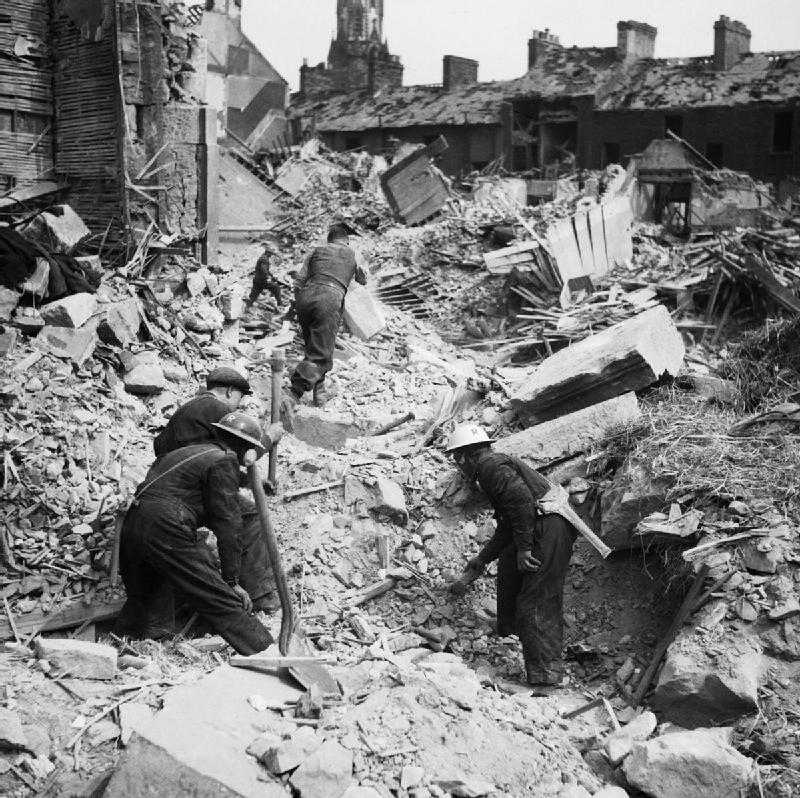
Heavy bombing of Belfast by Luftwaffe
Germany
'/%3e%3cpath d='M200 752.362h200v300H200z' style='fill:%23fff;fill-opacity:1;stroke:none' transform='translate(0 -752.362)'/%3e%3cpath d='M400 752.362h200v300H400z' style='fill:%23ff883e;fill-opacity:1;stroke:none' transform='translate(0 -752.362)'/%3e%3c/svg%3e)

Historical Events
World War II
Military History
3 min read
Updated By: History Editorial Network (HEN)
Published:
Updated:
The heavy bombing of Belfast by the Luftwaffe marked a critical phase in the air campaign during World War II. Belfast, a significant industrial city in Northern Ireland, was targeted due to its shipbuilding and manufacturing capabilities, which were vital for the British war effort. The Luftwaffe aimed to disrupt production and instill fear among the civilian population. The bombings resulted in extensive damage to infrastructure, homes, and factories, leading to significant civilian casualties. The attacks were part of a broader strategy by Germany to weaken Britain through sustained aerial bombardment, known as the Blitz. The impact on Belfast was profound, with thousands of residents displaced and many buildings destroyed or severely damaged. The psychological effect on the population was also considerable, as the constant threat of air raids created an atmosphere of fear and uncertainty. Despite the destruction, the resilience of the people of Belfast was notable, as they continued to support the war effort and rebuild their city in the aftermath of the bombings. The events in Belfast highlighted the strategic importance of industrial cities in wartime and the devastating effects of aerial warfare on civilian life.
#mooflife
#MomentOfLife
#BelfastBombing
#Luftwaffe
#WorldWarIi
#AerialWarfare
#CivilianImpact
Primary Reference
Belfast Blitz

Explore the Life Moments of
 AI Twin