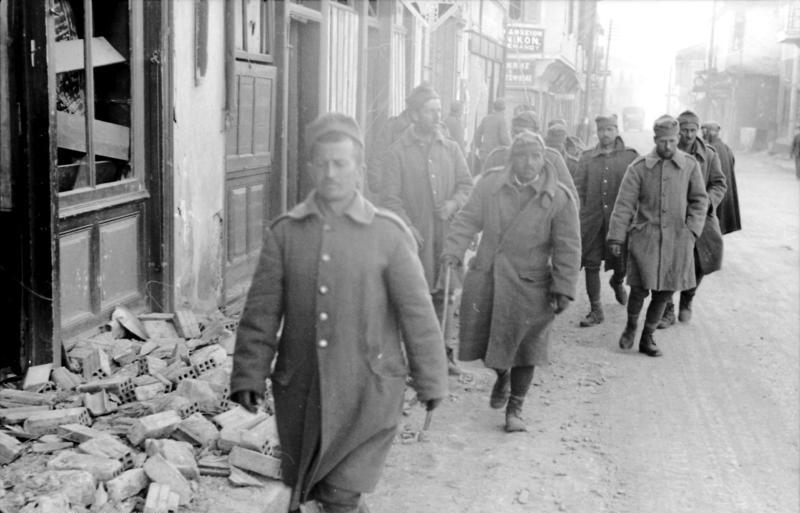
Greek Soldiers Surrender Amid German Advance
Germany

Military
World War II
4 min read
Updated By: History Editorial Network (HEN)
Published:
Updated:
The surrender of Greek soldiers during the German advance marked a critical point in the military operations in the region. As German forces advanced, the Greek army found itself in a precarious position, with their retreat routes effectively cut off. This led to the surrender of approximately 223,000 Greek soldiers stationed in Albania. The situation was dire, as the Greek forces were unable to regroup or receive adequate support, resulting in a significant loss of manpower and resources. The surrender not only represented a military defeat for Greece but also had broader implications for the Allied forces in the region, as it weakened their position against Axis powers. The evacuation of the Greek government to Crete was a direct response to the deteriorating situation, highlighting the urgency of the circumstances faced by the Greek leadership and military command.
The impact of this surrender extended beyond immediate military concerns. It signified a shift in the balance of power in the Balkans, as German forces consolidated their control over Greece. The loss of such a large contingent of soldiers had lasting effects on the Greek military capabilities and morale. Furthermore, the evacuation of British and Australian forces from Greece to Crete and Egypt underscored the strategic importance of these locations in the ongoing conflict. The events surrounding the surrender of Greek soldiers were part of a larger narrative of resistance and struggle against Axis occupation, influencing subsequent military strategies and alliances in the region.
#mooflife
#MomentOfLife
#GreekSoldiersSurrender
#GermanAdvance
#WorldWarIi
#MilitaryHistory
#BalkansConflict
Primary Reference
German invasion of Greece

Explore the Life Moments of
 AI Twin