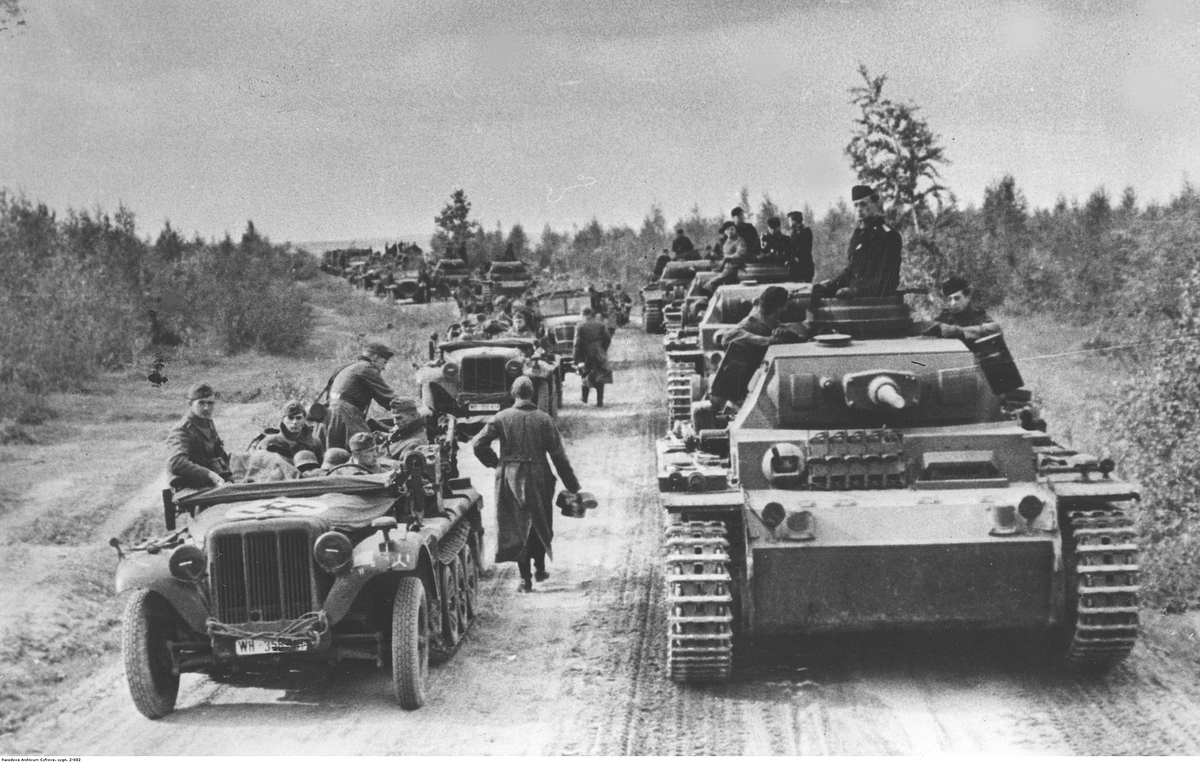
German tank armies began their offensive towards Klin
Germany


World War II
Military
3 min read
Updated By: History Editorial Network (HEN)
Published:
Updated:
The German advance towards Moscow was a critical phase during the Eastern Front of World War II. Following the capture of key territories, including Hiiumaa Island, German forces aimed to capitalize on their momentum and push deeper into Soviet territory. The initial stages of this offensive were marked by favorable conditions as the ground, previously muddy, began to harden, allowing for more effective movement of troops and equipment. This period saw the German military strategizing to exploit their tactical advantages, with the objective of encircling and capturing the Soviet capital, which was seen as a decisive blow to Soviet morale and military capability.
However, the advance faced significant challenges as temperatures began to drop, leading to heavy snowfall that immobilized German tanks and hindered their progress. The harsh winter conditions not only affected the operational capabilities of the German forces but also provided the Soviet army with an opportunity to regroup and fortify their defenses. The combination of logistical difficulties and the onset of winter weather played a crucial role in shaping the course of the campaign, ultimately leading to a protracted conflict that would stretch into the following months. The German drive towards Moscow, while initially promising, highlighted the complexities of warfare in extreme conditions and the resilience of the Soviet defense.
#mooflife
#MomentOfLife
#GermanAdvance
#Moscow
#WorldWarIi
#EasternFront
#SovietDefense
Primary Reference
Battle of Moscow

Explore the Life Moments of
 AI Twin