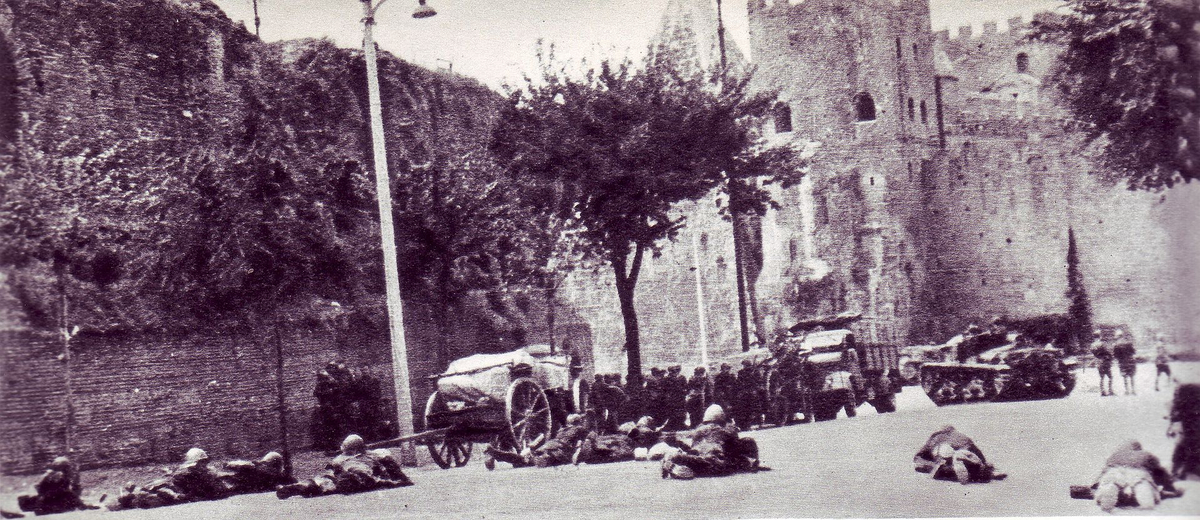
German Occupation of Rome
Germany


World War II
Military Events
4 min read
Updated By: History Editorial Network (HEN)
Published:
Updated:
The German occupation of Rome marked a pivotal moment in World War II, as German troops entered the city following Italy's armistice with the Allies. This occupation was part of a broader strategy by the Axis powers to maintain control over Italy and prevent the Allies from gaining a foothold in the region. The occupation led to significant changes in the governance of Rome, with the German military imposing strict control over the city and its inhabitants. The local population faced increased repression, including curfews and restrictions on movement, as the Germans sought to suppress any resistance. The occupation also had a profound impact on the Italian resistance movement, which began to organize more actively against the German forces and the remaining fascist elements in Italy.
Simultaneously, the Italian fleet's surrender at Malta and other Mediterranean ports represented a critical shift in naval power in the region. The surrender of the fleet not only diminished Italy's naval capabilities but also bolstered the Allies' position in the Mediterranean. This event allowed the Allies to secure vital shipping routes and prepare for further operations against Axis forces in Southern Europe. The combination of the German occupation of Rome and the surrender of the Italian fleet underscored the rapid changes occurring in the theater of war, as the Allies advanced through Italy and sought to liberate occupied territories. These developments set the stage for subsequent military engagements and the eventual liberation of Rome from German control.
#mooflife
#MomentOfLife
#GermanOccupation
#Rome
#ItalianFleetSurrender
#WorldWarIi
#AlliedStrategy
Primary Reference
German occupation of Rome

Explore the Life Moments of
 AI Twin