Franco-Italian Armistice and France's Surrender
Germany


World War II
Military
4 min read
Updated By: History Editorial Network (HEN)
Published:
Updated:
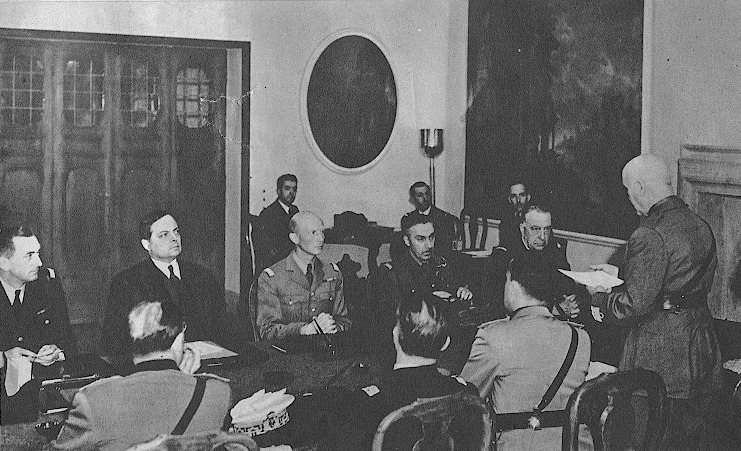
The Franco-Italian armistice followed the earlier Franco-German armistice, marking a critical point in World War II. The armistice with Italy was signed shortly after France's capitulation to Germany, which occurred in the early hours of the day. This sequence of events led to the formal surrender of France, which had significant implications for the balance of power in Europe. The armistice with Italy effectively solidified the Axis powers' control over France, as Italy joined Germany in the occupation of French territories. The surrender was not just a military defeat; it also represented a profound shift in the political landscape of Europe, leading to the establishment of the Vichy regime in France, which collaborated with the Axis powers.
The impact of these events was far-reaching. Following the armistice, France was divided into occupied and unoccupied zones, with the northern part under direct German control and the southern part governed by the Vichy regime. This division created a complex situation for the French population, leading to resistance movements and a struggle for national identity. Additionally, the armistice resulted in the last major evacuation of Operation Aerial, where approximately 191,870 Allied soldiers, airmen, and civilians managed to escape from France. This evacuation highlighted the urgency and chaos of the situation, as many sought refuge from the advancing Axis forces. The armistice and subsequent surrender of France marked a pivotal moment in the war, influencing military strategies and alliances in the years that followed.
#mooflife
#MomentOfLife
#Franco-italianArmistice
#FranceSurrender
#WorldWarIi
#AxisPowers
#OperationAerial
Primary Reference
Franco-Italian Armistice

Explore the Life Moments of
 AI Twin