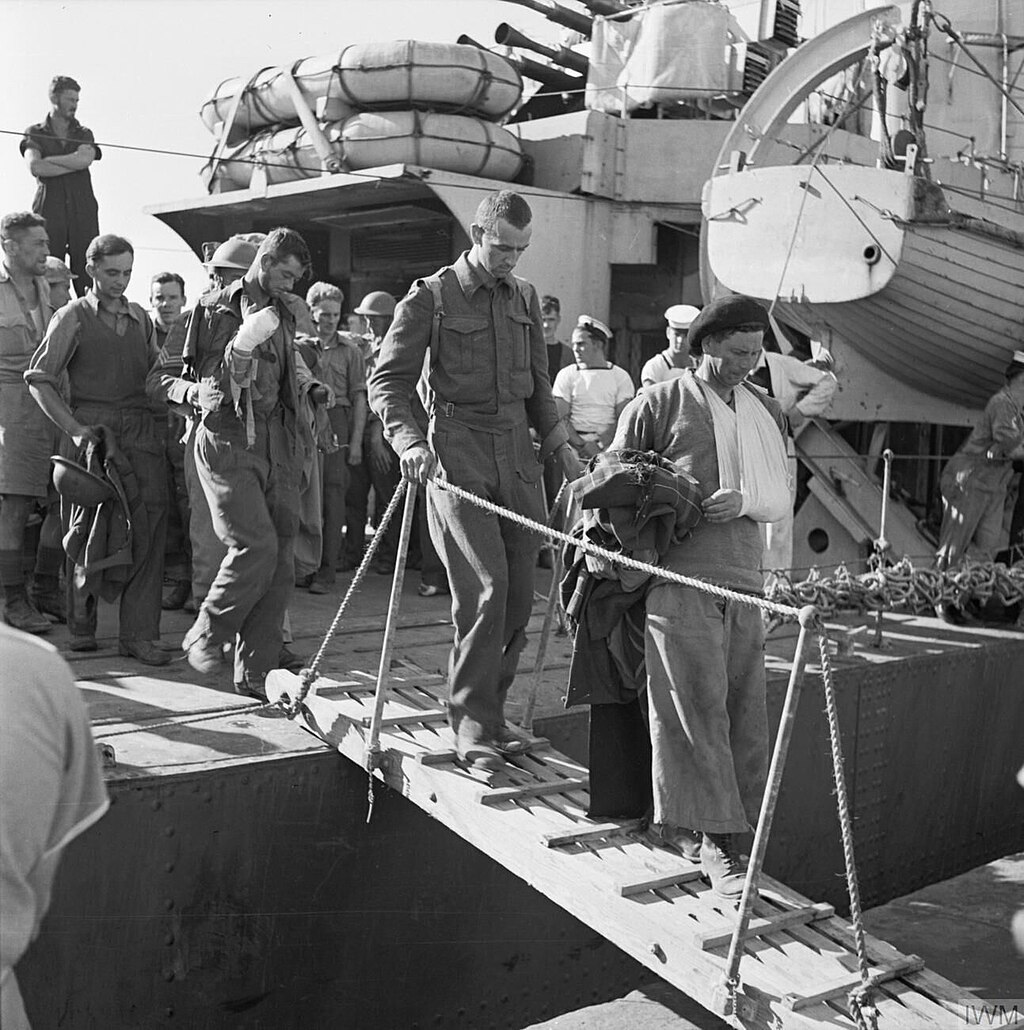
Evacuation of Crete by British Forces
Germany
'%3e%3cpath fill='%23012169' d='M0 0v30h60V0z'/%3e%3cpath stroke='%23fff' stroke-width='6' d='m0 0 60 30m0-30L0 30'/%3e%3cpath stroke='%23C8102E' stroke-width='4' d='m0 0 60 30m0-30L0 30' clip-path='url(%23b)'/%3e%3cpath stroke='%23fff' stroke-width='10' d='M30 0v30M0 15h60'/%3e%3cpath stroke='%23C8102E' stroke-width='6' d='M30 0v30M0 15h60'/%3e%3c/g%3e%3c/svg%3e)
Military
World War II
4 min read
Updated By: History Editorial Network (HEN)
Published:
Updated:
The evacuation of Crete by British and Commonwealth forces was a critical military operation during World War II. Following the failure of Operation Brevity, which aimed to regain control of the Libyan port of Tobruk, the situation in Crete became increasingly precarious. The island had been occupied by Axis forces, and the British command recognized the need to withdraw their troops to prevent further losses. The evacuation was marked by a series of strategic decisions aimed at ensuring the safe extraction of personnel amidst ongoing hostilities. The operation involved naval and air support, as well as coordination with local resistance groups to facilitate the movement of troops and supplies. Despite the challenges posed by enemy forces, the evacuation was executed with a focus on minimizing casualties and preserving military resources.
The impact of the evacuation was significant, as it allowed British and Commonwealth forces to regroup and reassess their strategies in the Mediterranean theater. Approximately 15,000 troops were successfully evacuated, although many others were left behind and captured by German forces. The operation highlighted the logistical difficulties of conducting military evacuations under fire and underscored the importance of air superiority in such operations. The lessons learned from the evacuation of Crete would influence future military planning and operations in the region, as the Allies sought to adapt to the evolving dynamics of the war. Overall, the evacuation represented a crucial moment in the broader context of World War II, illustrating both the challenges faced by Allied forces and their resilience in the face of adversity.
#mooflife
#MomentOfLife
#CreteEvacuation
#WorldWarIi
#BritishForces
#MilitaryOperations
#MediterraneanTheater
Primary Reference
https://en.wikipedia.org/wiki/Battle_of_Crete

Explore the Life Moments of
 AI Twin