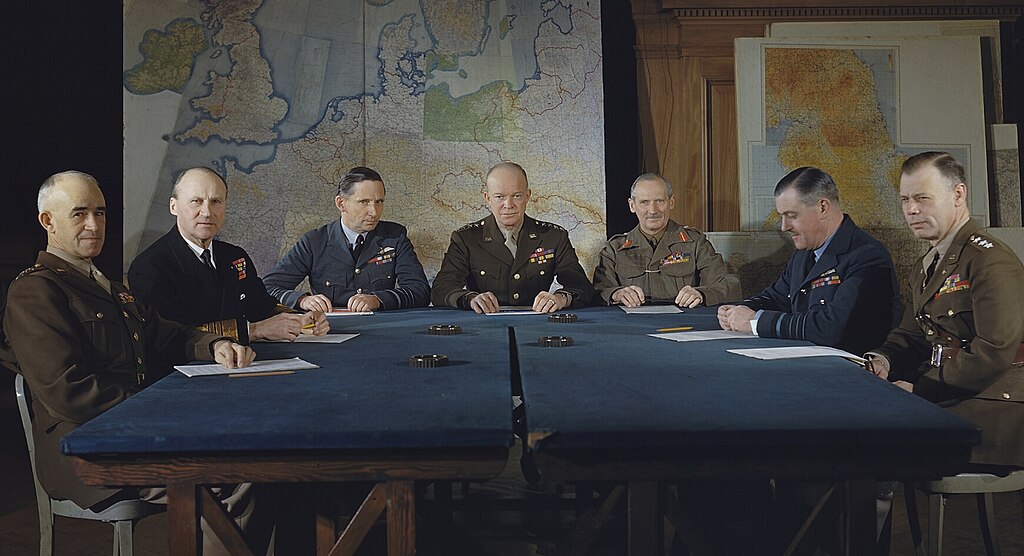
Eisenhower assumes command in London
Germany
Military History
World War II
Leadership
4 min read
Updated By: History Editorial Network (HEN)
Published:
Updated:
General Dwight D. Eisenhower took command of the European Theater of Operations during a critical phase of World War II. His appointment as the Commanding General of U.S. Forces in this theater was formalized through General Orders No. 4. Eisenhower's leadership was pivotal as the Allies prepared for a series of operations aimed at liberating Europe from Axis control. His return to London followed a period of strategic planning in Washington, D.C., where he coordinated with other military leaders to outline the next steps in the campaign against Nazi Germany. Eisenhower's command was characterized by a collaborative approach, working closely with British and other Allied forces to ensure a unified strategy. This collaboration was essential for the success of upcoming operations, including the planning for the D-Day invasion, which would require extensive coordination and resources from multiple nations.
Eisenhower's leadership style emphasized clear communication and the importance of morale among troops. Under his command, the U.S. forces in Europe saw significant organizational changes that improved operational efficiency. The impact of his leadership was evident in the successful execution of major offensives, which contributed to the eventual defeat of Axis powers in Europe. Eisenhower's ability to manage diverse military forces and navigate complex political landscapes was crucial during this period. His tenure as the Commanding General not only shaped the course of the war but also established a framework for post-war Europe, influencing military strategy and international relations for years to come.
#mooflife
#MomentOfLife
#Eisenhower
#WorldWarIi
#EuropeanTheater
#MilitaryLeadership
#AlliedForces

Explore the Life Moments of
 AI Twin