Doolittle Raid on Japanese Cities
Germany


Military
World War II
4 min read
Updated By: History Editorial Network (HEN)
Published:
Updated:
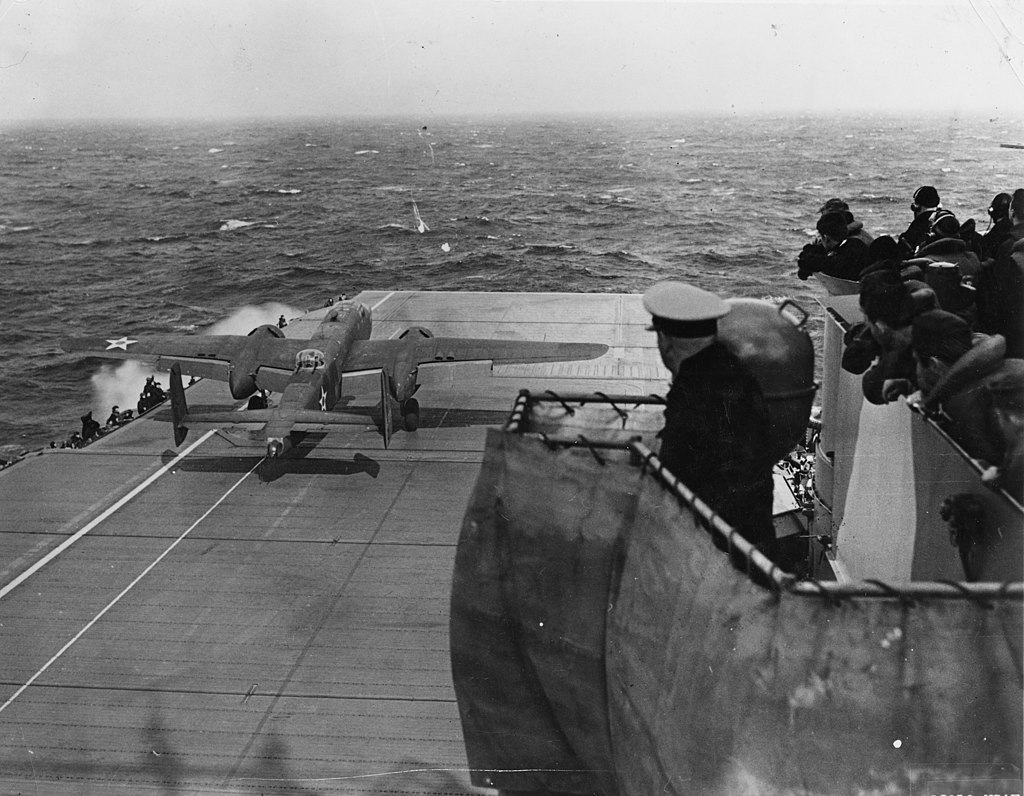
The Doolittle Raid was a pivotal military operation during World War II, marking the first air raid by the United States on the Japanese mainland. Led by Lieutenant Colonel James Doolittle, the mission involved launching 16 B-25 bombers from the aircraft carrier USS Hornet. The primary targets were strategic locations in Tokyo, Yokohama, and Nagoya, aiming to inflict damage on Japanese military infrastructure and boost American morale following the attack on Pearl Harbor. The operation was notable not only for its audacity but also for its execution, as the bombers had to take off from a carrier, which was a significant challenge given the limited range of the B-25s. The raid resulted in minimal physical damage to Japan but had a profound psychological impact, demonstrating that Japan was vulnerable to American air attacks and altering the perception of the war's trajectory.
The Doolittle Raid also had broader implications for military strategy in the Pacific Theater. It prompted Japan to reconsider its defensive strategies and led to the deployment of resources to protect the home islands, which ultimately contributed to the Japanese decision to engage in the Battle of Midway. The raid served as a morale booster for the American public and military, reinforcing the belief that victory was achievable. Despite the loss of some aircraft and crew members during the mission, the Doolittle Raid is remembered as a bold and innovative operation that showcased American resolve and ingenuity in the face of adversity.
#mooflife
#MomentOfLife
#DoolittleRaid
#WorldWarIi
#UssHornet
#JapaneseMainland
#MilitaryStrategy
Primary Reference
Doolittle Raid

Explore the Life Moments of
 AI Twin