D-Day (Operation Overlord, Normandy landings)
Germany

'%3e%3cpath fill='%23012169' d='M0 0v30h60V0z'/%3e%3cpath stroke='%23fff' stroke-width='6' d='m0 0 60 30m0-30L0 30'/%3e%3cpath stroke='%23C8102E' stroke-width='4' d='m0 0 60 30m0-30L0 30' clip-path='url(%23b)'/%3e%3cpath stroke='%23fff' stroke-width='10' d='M30 0v30M0 15h60'/%3e%3cpath stroke='%23C8102E' stroke-width='6' d='M30 0v30M0 15h60'/%3e%3c/g%3e%3c/svg%3e)

4 min read
Updated By: History Editorial Network (HEN)
Published:
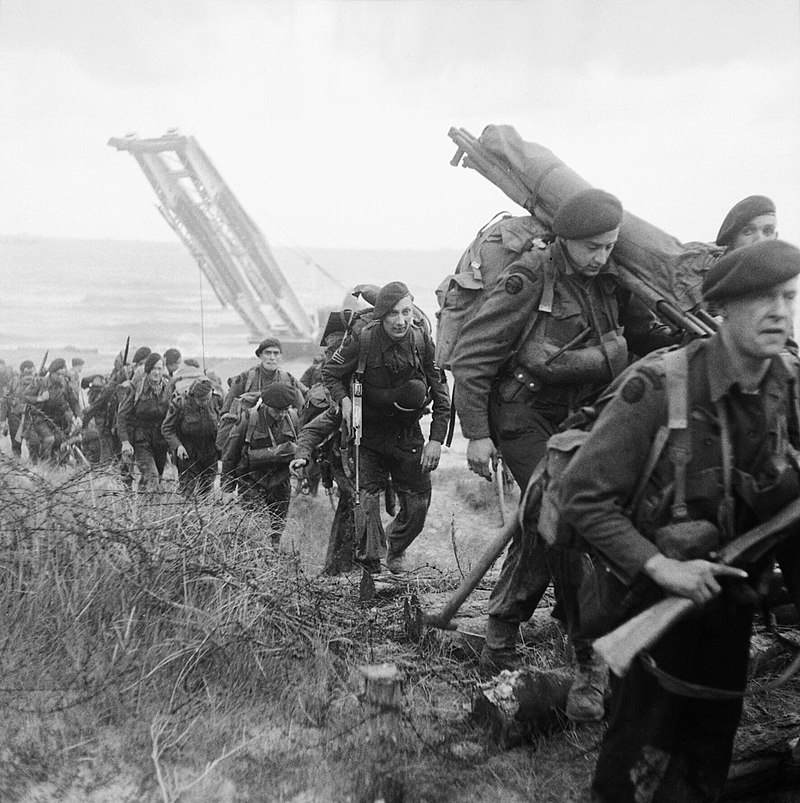
On 6 June 1944, Allied forces launched Operation Overlord, the largest amphibious invasion in history, against German-occupied France. Commonly known as D-Day, the operation aimed to establish a Western front in Europe, relieve pressure on Soviet forces in the East, and begin the liberation of Nazi-controlled territories. The landings targeted a 50-mile stretch of the Normandy coast, divided into five sectors: Utah and Omaha (American), Gold and Sword (British), and Juno (Canadian).
The assault involved nearly 156,000 troops supported by more than 5,000 ships and 11,000 aircraft. Airborne divisions were dropped behind German lines during the night to disrupt communications and seize key positions, while naval bombardments preceded the beach assaults at dawn. Resistance varied across the beaches: at Utah, U.S. forces advanced inland relatively quickly, whereas at Omaha they encountered strong defenses, suffering heavy casualties before securing the area. British and Canadian troops faced determined opposition but managed to secure footholds at Gold, Juno, and Sword.
German defenses, organized under Field Marshal Erwin Rommel as part of the Atlantic Wall, were unable to repel the invasion. By the end of 6 June, the Allies had established beachheads, though progress was limited and costly. Approximately 10,000 Allied casualties were sustained on the first day.
D-Day marked a decisive turning point in the Second World War. It established a permanent Allied presence in Western Europe, leading to the liberation of France and contributing significantly to Germany’s eventual defeat in May 1945.
#MomentsOfLife #MoofLife_Moment #MoofLife #WWII #DDay #OperationOverlord #NormandyLandings #WesternFront
Primary Reference
Normandy landings

Explore the Life Moments of
 AI Twin