Canada declares war on Germany
Germany
Politics
War
4 min read
Updated By: History Editorial Network (HEN)
Published:
Updated:
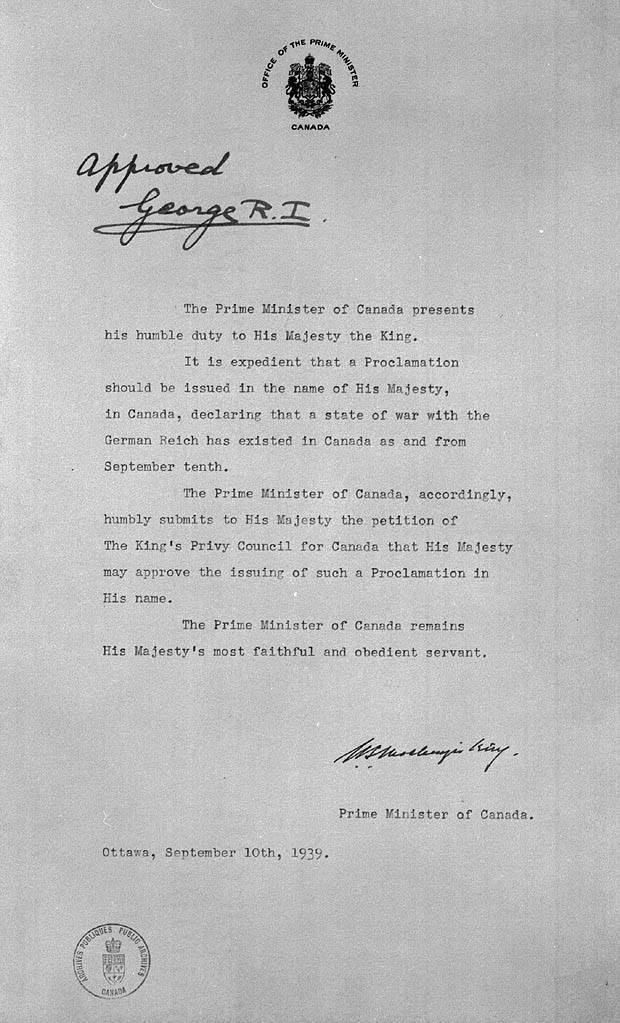
Canada's declaration of war on Germany marked a pivotal moment in the nation's military history and its role on the global stage. Following a unanimous decision by both Houses of the Canadian Parliament, Prime Minister W. L. Mackenzie King announced the declaration, aligning Canada with the Allied powers in response to Germany's aggressive actions in Europe. This decision was not made lightly; it reflected the growing concerns over the threat posed by Nazi Germany and the need for collective security among nations. Canada's involvement in the conflict was significant, as it demonstrated the country's commitment to international peace and stability, as well as its willingness to support its allies in the face of tyranny. The declaration also had profound implications for Canada domestically, as it mobilized the nation for war, leading to increased recruitment efforts and the establishment of military training programs.
The impact of Canada's declaration extended beyond its borders, contributing to the larger Allied war effort against the Axis powers. Canada played a crucial role in various military campaigns, providing troops, resources, and support to the Allies. The war effort also fostered a sense of national identity and unity among Canadians, as citizens rallied to support the troops and contribute to the war economy. Statistics indicate that over a million Canadians enlisted during the conflict, showcasing the widespread commitment to the war effort. The declaration of war not only marked Canada's entry into World War II but also set the stage for its evolution into a more independent and assertive nation on the world stage, shaping its foreign policy for decades to come.
#mooflife
#MomentOfLife
#Canada
#WorldWarIi
#W.L.MackenzieKing
#MilitaryHistory
#AlliedPowers
Primary Reference
Canadian declaration of war on Germany

Explore the Life Moments of
 AI Twin