Battle of Tarawa
Germany


4 min read
Updated By: History Editorial Network (HEN)
Published:
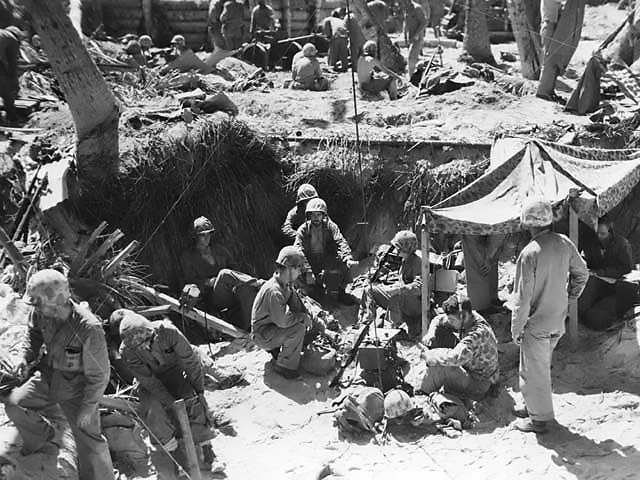
The Battle of Tarawa took place from 20 to 23 November 1943, during the Pacific campaign of the Second World War. It was the first major U.S. amphibious assault on a heavily fortified Japanese position in the central Pacific and served as a critical test of the “island hopping” strategy. The target was Betio Island, part of the Tarawa Atoll in the Gilbert Islands, defended by approximately 4,500 Japanese troops under Rear Admiral Keiji Shibazaki. The island had been heavily fortified with bunkers, pillboxes, coastal guns, and obstacles intended to repel amphibious landings.
The assault was carried out by the U.S. 2nd Marine Division under Major General Julian C. Smith, supported by naval bombardment and carrier-based aircraft. However, inaccurate pre-landing bombardment left many Japanese defenses intact. Compounding the difficulty, tides were lower than expected, causing landing craft to ground on reefs and forcing Marines to wade hundreds of meters under intense fire. Despite severe casualties on the first day, U.S. forces gradually secured footholds, systematically destroying Japanese positions with grenades, flamethrowers, and demolitions. By 23 November, organized resistance had ceased, though fighting was fierce to the last.
The cost of victory was high: over 1,000 U.S. Marines were killed and more than 2,000 wounded. Japanese losses were nearly total, with only 17 defenders taken prisoner. The battle demonstrated both the ferocity of Japanese resistance and the challenges of amphibious warfare, shaping U.S. planning for subsequent operations in the Pacific.
#MomentsOfLife #MoofLife_Moment #MoofLife #WWII #Tarawa #PacificWar #IslandHopping #USMarines
Primary Reference
Battle of Tarawa

Explore the Life Moments of
 AI Twin