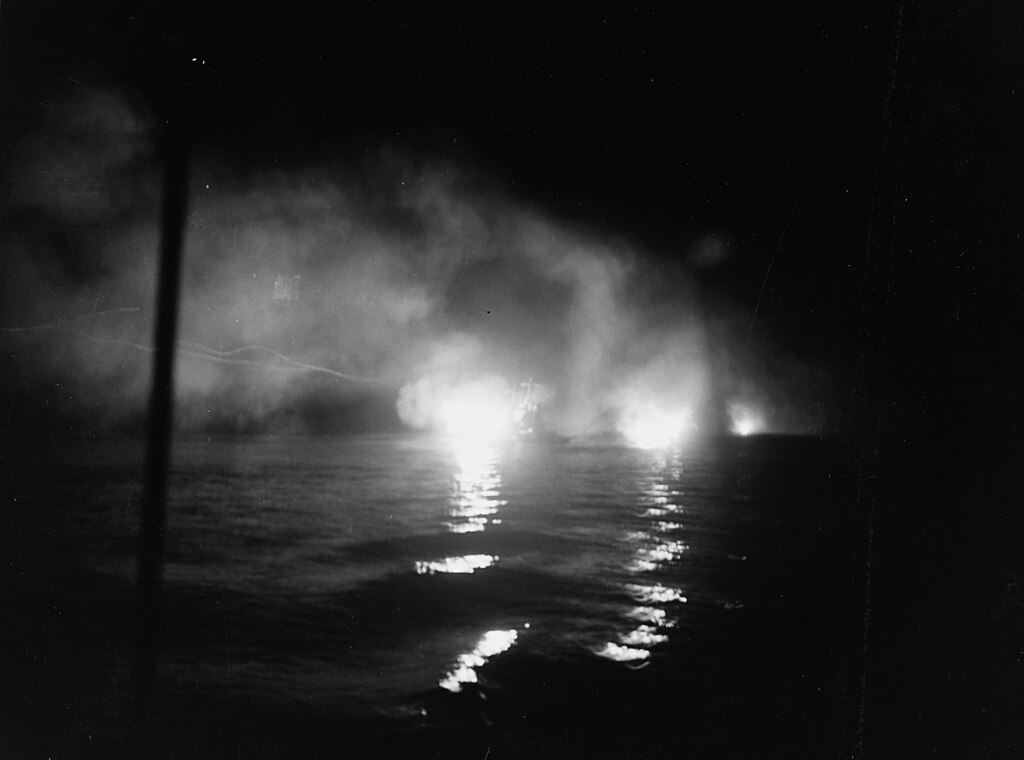
Battle of Kula Gulf in the Solomons
Germany
Military
World War II
4 min read
Updated By: History Editorial Network (HEN)
Published:
Updated:
The Battle of Kula Gulf was a naval engagement that took place in the Solomon Islands during World War II. This battle involved U.S. and Japanese naval forces, marking a critical point in the Pacific Theatre. The engagement was part of the broader campaign for control of the Solomon Islands, which were strategically important for both sides. The U.S. aimed to secure the area to prevent Japanese expansion and to establish a base for future operations. The battle was characterized by intense naval combat, with both sides employing destroyers and cruisers in a series of confrontations. The U.S. forces, having learned from previous encounters, utilized improved tactics and coordination, which played a significant role in their operational effectiveness during the battle. The outcome of the Battle of Kula Gulf had a considerable impact on the naval balance in the region, contributing to the gradual shift in momentum towards the Allies in the Pacific. The engagement also highlighted the importance of intelligence and reconnaissance in naval warfare, as both sides sought to outmaneuver each other in the confined waters of the Solomon Islands. The battle resulted in the sinking of several ships, further depleting Japanese naval resources and affecting their operational capabilities in subsequent engagements. This battle, along with others in the Solomon Islands, was instrumental in the Allies' strategy to regain control of the Pacific and ultimately led to the decline of Japanese naval power in the region.
#mooflife
#MomentOfLife
#BattleOfKulaGulf
#WorldWarIi
#PacificTheatre
#NavalWarfare
#SolomonIslands

Explore the Life Moments of
 AI Twin