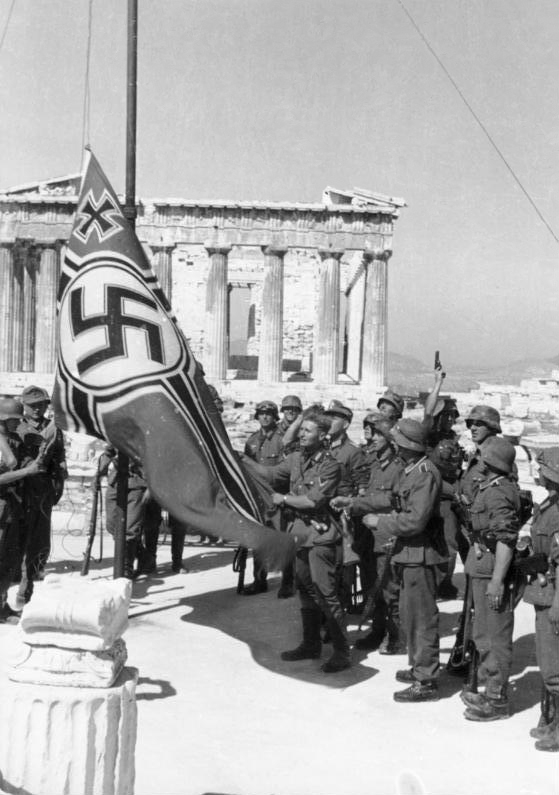
Athens occupied by German troops
Germany

World War II
Military History
European History
4 min read
Updated By: History Editorial Network (HEN)
Published:
Updated:
The occupation of Athens by German troops marked a pivotal moment in the Second World War, as it signified the surrender of Greece to Axis forces. The invasion was part of a broader campaign in the Balkans, where German military strategy aimed to secure southern Europe and prevent Allied forces from establishing a foothold in the region. The occupation led to significant changes in the political landscape of Greece, as the country was subjected to harsh military governance and economic exploitation. The German forces implemented strict control measures, which included the suppression of resistance movements and the imposition of heavy taxes on the local population. This occupation resulted in widespread suffering, including famine and repression, which would have lasting effects on Greek society and its post-war recovery.
The impact of the occupation extended beyond Greece, influencing the dynamics of the war in the Mediterranean. The German military presence in Athens facilitated further operations in the region, including support for Axis forces in North Africa. The occupation also prompted a response from the Allies, who recognized the strategic importance of Greece. The delivery of Hurricane fighter planes to Malta during this period was a direct response to the need for reinforcements in the Mediterranean theater, highlighting the interconnected nature of military operations. The occupation of Athens and the subsequent events underscored the challenges faced by the Allies in countering Axis advances and the complexities of warfare in a multi-theater conflict.
#mooflife
#MomentOfLife
#Athens
#GermanOccupation
#GreeceSurrender
#WorldWarIi
#MediterraneanTheater
Primary Reference
Axis occupation of Greece

Explore the Life Moments of
 AI Twin