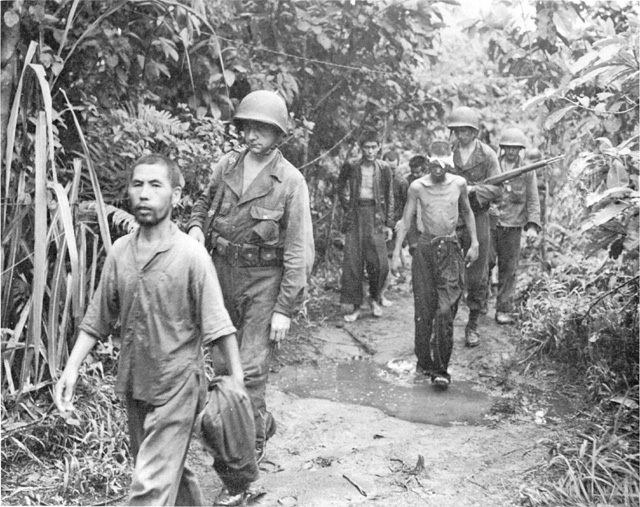
Allies push Japanese out of Buna
Germany

'/%3e%3c/defs%3e%3cpath fill='%23012169' d='M0 0h10080v5040H0z'/%3e%3cpath stroke='%23fff' stroke-width='.6' d='m0 0 6 3m0-3L0 3' clip-path='url(%23b)' transform='scale(840)'/%3e%3cpath stroke='%23e4002b' stroke-width='.4' d='m0 0 6 3m0-3L0 3' clip-path='url(%23c)' transform='scale(840)'/%3e%3cpath stroke='%23fff' stroke-width='840' d='M2520 0v2520M0 1260h5040'/%3e%3cpath stroke='%23e4002b' stroke-width='504' d='M2520 0v2520M0 1260h5040'/%3e%3cg fill='%23fff'%3e%3cuse xlink:href='%23d' x='2520' y='3780'/%3e%3cuse xlink:href='%23a' x='7560' y='4200'/%3e%3cuse xlink:href='%23a' x='6300' y='2205'/%3e%3cuse xlink:href='%23a' x='7560' y='840'/%3e%3cuse xlink:href='%23a' x='8680' y='1869'/%3e%3cuse xlink:href='%23e' x='8064' y='2730'/%3e%3c/g%3e%3c/svg%3e)


World War II
Military History
Pacific Theater
4 min read
Updated By: History Editorial Network (HEN)
Published:
Updated:
The campaign to push Japanese forces out of Buna, New Guinea, was a critical operation during World War II, reflecting the broader struggle for control in the Pacific theater. American and Australian troops engaged in intense combat against entrenched Japanese positions, which had been fortified in the region. The Allies faced numerous challenges, including difficult terrain, harsh weather conditions, and a determined enemy. The operation was part of a larger strategy to secure the region and prevent Japanese expansion, which posed a significant threat to Allied supply lines and communication routes in the Pacific. The successful push at Buna marked a turning point in the campaign, demonstrating the effectiveness of combined Allied forces and their ability to adapt to the challenges of jungle warfare.
The impact of the Allies' victory at Buna extended beyond the immediate military success. It served to boost morale among Allied troops and contributed to a shift in the balance of power in the Pacific. The operation also highlighted the importance of cooperation between American and Australian forces, setting a precedent for future joint operations. The successful campaign at Buna was followed by further engagements, including the Battle of the Gifu, as the Allies continued to press their advantage against Japanese forces. This series of battles ultimately contributed to the gradual decline of Japanese military power in the region, paving the way for subsequent Allied offensives and the eventual liberation of occupied territories in the Pacific.
#mooflife
#MomentOfLife
#Buna
#WorldWarIi
#AlliedForces
#JapaneseTroops
#PacificTheater
Primary Reference
Battle of Buna–Gona

Explore the Life Moments of
 AI Twin