Allied Bombers Suffer Heavy Losses in Mission
Germany

'%3e%3cpath fill='%23012169' d='M0 0v30h60V0z'/%3e%3cpath stroke='%23fff' stroke-width='6' d='m0 0 60 30m0-30L0 30'/%3e%3cpath stroke='%23C8102E' stroke-width='4' d='m0 0 60 30m0-30L0 30' clip-path='url(%23b)'/%3e%3cpath stroke='%23fff' stroke-width='10' d='M30 0v30M0 15h60'/%3e%3cpath stroke='%23C8102E' stroke-width='6' d='M30 0v30M0 15h60'/%3e%3c/g%3e%3c/svg%3e)

Military
World War II
3 min read
Updated By: History Editorial Network (HEN)
Published:
Updated:
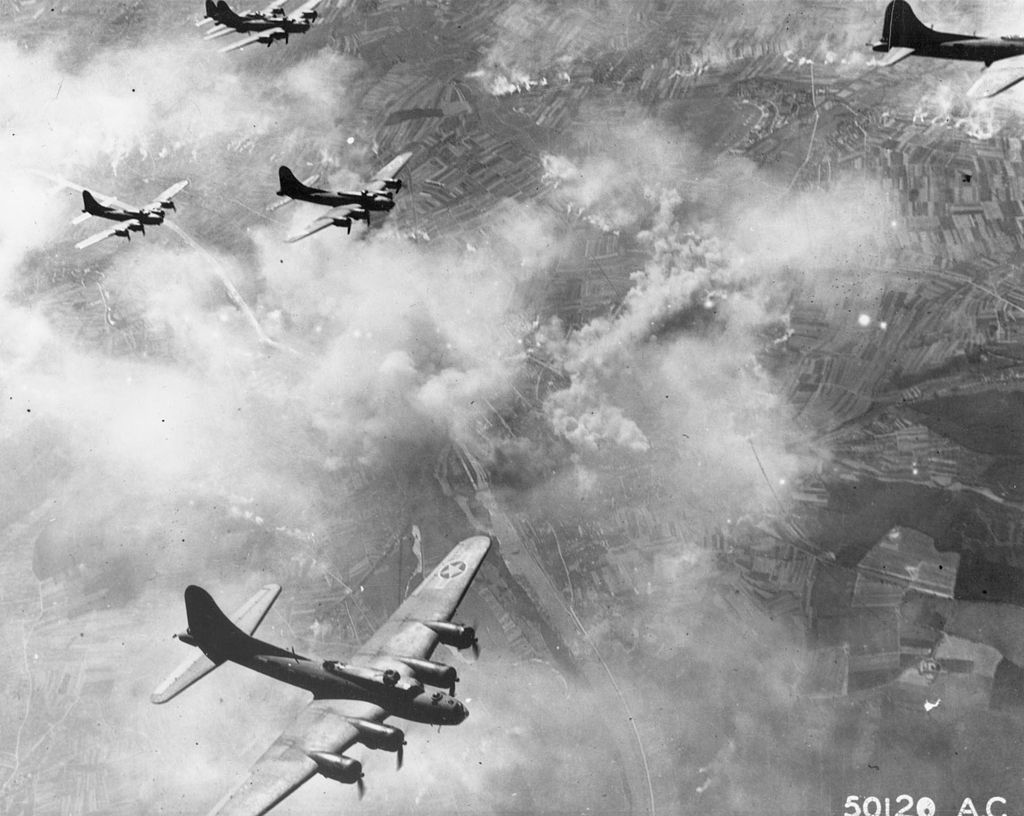
The Schweinfurt–Regensburg mission was a critical air operation conducted by Allied forces during World War II, aimed at crippling the German aircraft industry. This mission involved a coordinated bombing raid targeting two key industrial sites in Germany. The operation was significant not only for its strategic objectives but also for the heavy losses incurred by the Allied bomber fleets. The mission faced intense German air defenses, including fighter interceptors and anti-aircraft artillery, which resulted in substantial casualties among the Allied bombers. Reports indicate that a significant percentage of the bombers involved did not return, marking one of the most devastating days for the Allied air campaign. The losses prompted a reevaluation of bombing strategies and highlighted the challenges of conducting large-scale air operations deep within enemy territory. The impact of this mission extended beyond immediate losses; it influenced subsequent air operations and tactics, leading to changes in how the Allies approached strategic bombing in Europe. The high casualty rates underscored the risks associated with such missions and the need for improved fighter escort strategies to protect bombers from enemy fighters. This operation remains a pivotal example of the complexities and dangers of aerial warfare during the conflict.
#mooflife
#MomentOfLife
#SchweinfurtRegensburg
#AlliedBombers
#WorldWarIi
#AirOperations
#MilitaryStrategy
Primary Reference
Schweinfurt–Regensburg mission

Explore the Life Moments of
 AI Twin