US Responds to German Aggression in WWI: Tensions, Unrestricted Submarine Warfare, Diplomatic Rift
Germany
Political
Global Trade
4 min read
Updated By: History Editorial Network (HEN)
Published:
Updated:
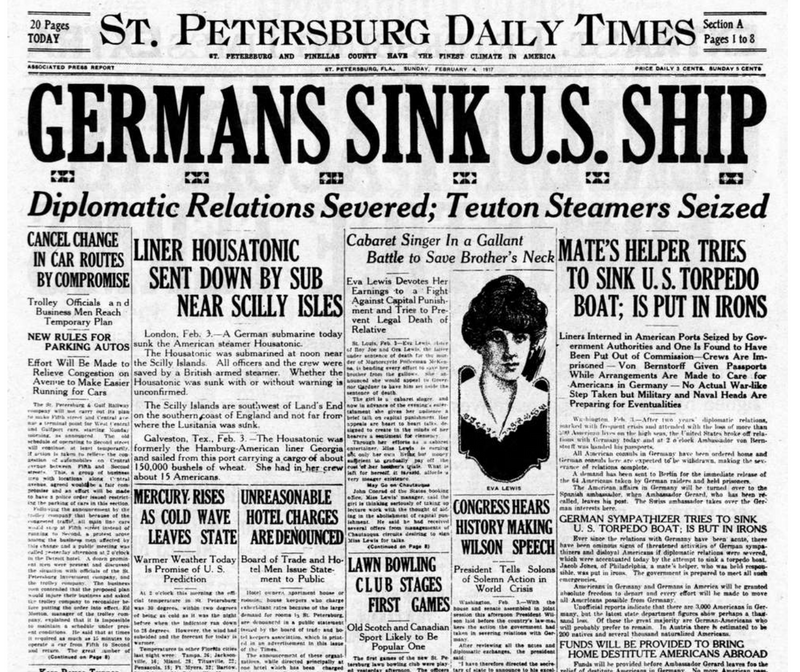
In the early 20th century, heightened tensions in Europe led to the outbreak of World War I, involving many global powers. The United States initially maintained a stance of neutrality. However, Germany's continued aggressive military strategies, including the use of unrestricted submarine warfare, significantly strained U.S.-German relations. Submarines targeted and sank vessels without warning, jeopardizing civilian lives and international commerce.
The diplomatic rift widened when Germany resumed unrestricted submarine warfare, ignoring previous agreements and risking American vessels and nationals. The aggressive naval tactics violated principles of maritime law and international conduct, leading to significant loss of life and property. The U.S. government's patience waned, prompting President Woodrow Wilson to make the decision to sever diplomatic ties with Germany. This act marked a critical pivot in U.S. foreign policy, moving the nation closer to active involvement in the global conflict.
As tensions escalated, various sectors within the United States began preparing for potential engagement in the war. Industry, military, and civilians faced the realities of a potential draft and increased production for wartime supplies. The public response was mixed, with debates about the nation's role in global affairs.
The severance of diplomatic relations was a clear signal of the United States’ intolerance of Germany’s naval strategy and a step towards safeguarding its national interests. This moment foreshadowed the eventual involvement of the United States in World War I, which would later have profound effects on the outcome of the war and global geopolitics.
#WorldWarI #USHistory #SubmarineWarfare #Diplomacy #WoodrowWilson #MilitaryHistory #GlobalConflict #MoofLife
Primary Reference
U.S. Entry into World War I, 1917
Explore the Life Moments of
 AI Twin