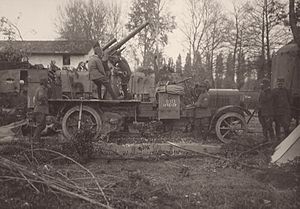
The Eleventh Battle of the Isonzo: Limited Gains, Heavy Losses, and Exhaustion on the Italian Front.
Germany
Military
4 min read
Updated By: History Editorial Network (HEN)
Published:
Updated:
The Eleventh Battle of the Isonzo ended with limited territorial gains but heavy casualties, leading to exhaustion among Italian and Austro-Hungarian forces on the Italian Front. This battle was one in a series of twelve Isonzo battles, conducted by the Italian Army and the Austro-Hungarian Army along the Isonzo River in northeastern Italy. Prior to this battle, the Italian military command aimed to break the Austro-Hungarian lines and secure a decisive victory. However, the terrain, marked by rocky mountains and the river itself, posed significant obstacles.
The Italian forces, commanded by General Luigi Cadorna, launched continuous assaults against Austro-Hungarian positions. Despite their efforts, the Austro-Hungarian defense, reinforced with artillery and machine guns, was resilient. As the fighting dragged on, both sides suffered substantial casualties. Italian forces faced around 150,000 casualties, while the Austro-Hungarians sustained approximately 100,000.
The strategic gains were minimal, with only small stretches of territory changing hands. The prolonged engagements and high number of soldiers lost put significant strain on the resources and morale of both armies. This exhaustion significantly contributed to the ineffectiveness of subsequent military operations in the region.
Although the tactical outcome of the battle was inconsequential, it had a profound impact on the war effort in this theater. Both sides were forced to reevaluate their strategies and reconsider their supply lines and troop morale. The battle exemplified the brutal nature of World War I trench warfare and highlighted the challenges of offensive campaigns in difficult terrain.
#MoofLife #WWI #IsonzoBattles #WarFrontExhaustion #History
Primary Reference
Italian Front

Explore the Life Moments of
 AI Twin