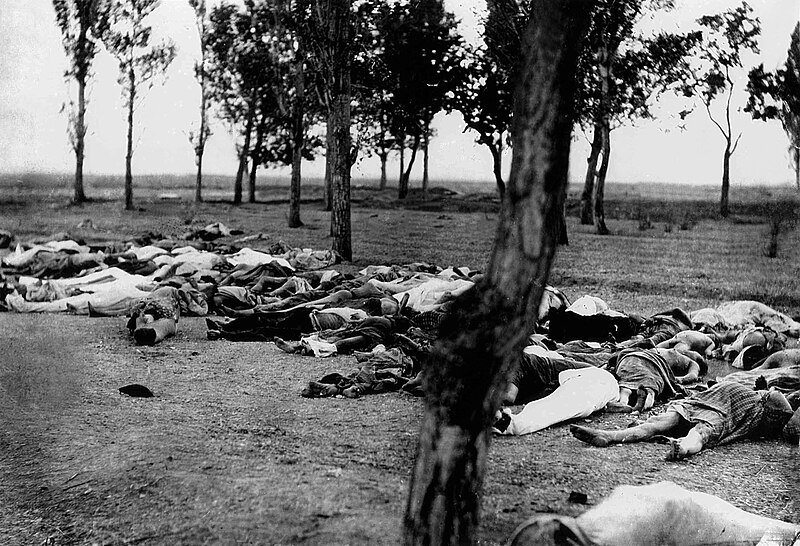
The Armenian Genocide continued, with deportations and massacres ongoing throughout the Ottoman Empire, resulting in a large loss of life.
Germany
7 min read
Updated By: History Editorial Network (HEN)
Published:
Updated:
In August 1915, the Armenian Genocide intensified as the Ottoman Empire relentlessly pursued its campaign of ethnic extermination against the Armenian people. Throughout the summer, the widespread deportations, forced marches, and mass killings that began in the spring grew in frequency and brutality. The systematic removal and destruction of Armenian communities became an empire-wide policy, sweeping through cities and towns and reaching even remote villages. This phase was characterized by increasingly ruthless methods intended to ensure the erasure of the Armenian presence from the empire.
The forced deportations continued in large convoys, with Armenians ordered to leave their homes under the pretense of "relocation." These groups were herded together with minimal belongings and given no provision for food or water, forced to march for days or even weeks toward the Syrian Desert. Armed guards accompanied the convoys, and rather than offering protection, they often attacked the deportees or handed them over to local militias and bandits, who assaulted, robbed, and murdered countless Armenians along the way. Those who managed to survive these "death marches" were met with more suffering in the desert, where makeshift camps awaited them. These camps were ill-equipped and overcrowded, and many deportees succumbed to starvation, exposure, and disease.
The loss of life in August 1915 was catastrophic, with entire villages emptied, families shattered, and cultural heritage sites destroyed. The Ottoman authorities continued to justify these actions as security measures amid World War I, labeling Armenians as a disloyal population. However, documented orders, as well as witness accounts from international diplomats, missionaries, and journalists stationed in the Ottoman Empire, made clear that the actions were intended to exterminate the Armenian population. The U.S. Ambassador to the Ottoman Empire, Henry Morgenthau Sr., famously described the events as a "campaign of race extermination."
As news of these atrocities reached the international community, humanitarian organizations attempted to provide relief, but wartime restrictions and the severity of the situation severely limited their impact. Global condemnation grew, yet meaningful intervention was scarce, with world powers focused on their own wartime struggles. For many Armenians who survived, August 1915 became a painful memory of unbearable loss, as well as a month of struggle that defined their lives and the lives of their descendants.
This period of the Armenian Genocide is now remembered as one of the darkest chapters in Armenian history, with the month of August representing the tragic height of systematic violence. Today, Armenian communities worldwide honor the memory of those who perished and continue to advocate for global recognition of the genocide to prevent such atrocities from occurring in the future.
#ArmenianGenocide #WWI #HumanRights #GenocideAwareness #MomentsOfLife #MoofLife_Moment #MoofLife
Primary Reference
The Armenian Allegation of Genocide: The issue and the facts ...
Explore the Life Moments of
 AI Twin