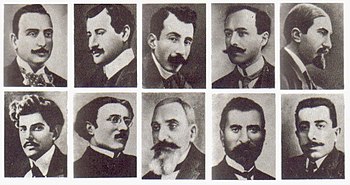
The Armenian Genocide began in the Ottoman Empire with the arrest and deportation of Armenian leaders and intellectuals in Constantinople, followed by mass killings and forced relocations.
Germany
7 min read
Updated By: History Editorial Network (HEN)
Published:
Updated:
On April 24, 1915, during World War I, the Ottoman Empire launched what became known as the Armenian Genocide, an event marking the systematic and brutal persecution of its Armenian population. The genocide began with the arrest and deportation of approximately 250 Armenian intellectuals, political leaders, writers, and community members in Constantinople (now Istanbul). This coordinated action, led by the ruling Committee of Union and Progress (CUP), set in motion a campaign of mass killings, forced deportations, and internment of Armenian civilians, primarily targeting men in positions of leadership. This date, April 24, is now commemorated annually as Armenian Genocide Remembrance Day.
The initial arrests were only the beginning of an empire-wide purge. Armenians were rounded up, removed from their homes, and subjected to "death marches" through the Syrian Desert without food or water, where many perished from starvation, dehydration, exposure, and violence. In these grueling conditions, countless lives were lost, and families were torn apart. Women, children, and the elderly were particularly vulnerable, often subjected to atrocities and exploitation. Those who survived the marches faced extreme hardships in makeshift camps that lacked basic supplies and medical care, which led to further deaths from disease and starvation.
Estimates suggest that by 1923, when the Ottoman Empire was officially dissolved, approximately 1.5 million Armenians had been killed—roughly two-thirds of the Armenian population within the empire. The genocide had devastating long-term effects on Armenian culture, language, and heritage in the region. Towns, churches, schools, and other centers of Armenian culture were destroyed or repurposed, erasing much of the Armenians' historical footprint.
The Ottoman authorities implemented a campaign of denial, attempting to minimize or obscure the events. Successive Turkish governments have continued this policy, rejecting the term "genocide" and arguing that the deaths were a consequence of wartime chaos rather than a planned extermination. Despite significant evidence, this stance has led to a contentious international debate over the recognition of the genocide, with some countries formally acknowledging it, while others, particularly those with strategic alliances with Turkey, refraining from doing so.
The Armenian Genocide stands as one of the first modern genocides, influencing international discourse on human rights, justice, and genocide prevention. It underscored the need for international frameworks, such as the Genocide Convention of 1948, to prevent future atrocities. Today, the Armenian diaspora, with communities spread across the world, actively works to raise awareness of the genocide, commemorate those who perished, and advocate for official recognition. The legacy of April 24, 1915, endures as a solemn reminder of the capacity for cruelty in times of war, and the ongoing struggle for justice and recognition for crimes against humanity.
#ArmenianGenocide #WWI #HumanRights #MomentsOfLife #MoofLife_Moment #MoofLife
Primary Reference
Armenia | Holocaust and Genocide Studies | College of Liberal Arts
Explore the Life Moments of
 AI Twin