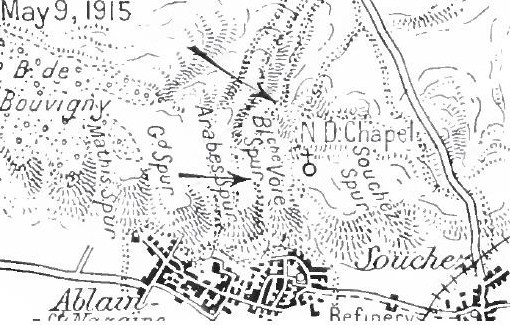
Second Battle of Artois: Allies launch unsuccessful offensive against German positions on Western Front.
Germany
Military
World War I
4 min read
Updated By: History Editorial Network (HEN)
Published:
Updated:
The Second Battle of Artois commenced when French and British forces launched a coordinated offensive against German positions on the Western Front. This military engagement formed part of a broader Allied strategy to break the entrenched stalemate that had characterized the war. The primary objective was to capture Vimy Ridge, a position that offered strategic advantage due to its elevation.
The French 10th Army, under General Victor d'Urbal, and British forces collaborated in this large-scale assault. The offensive was characterized by intense bombardment and infantry attacks. Artillery played a significant role, with approximately 1,200 French guns employed to weaken German defenses. Despite initial gains, particularly in capturing key heights and portions of trenches, the relentless German counterattacks and machine-gun fire exacted a heavy toll on the Allied forces.
Casualties were substantial, with French losses exceeding 100,000 and British losses amounting to around 16,000. The Germans sustained approximately 75,000 casualties. Although the offensive managed to secure limited territorial gains, it did not achieve a decisive breakthrough. The German fortified defenses and the challenging terrain hindered further advances.
This battle highlighted the attritional nature of World War I, demonstrating the difficulties of overcoming heavily fortified positions with the tactics and technology of the time. The Second Battle of Artois ultimately resulted in a continuation of the stalemate, contributing to the protracted and grueling nature of trench warfare on the Western Front.
#WesternFront #TrenchWarfare #MoofLife
Primary Reference
1915: Early trench battles | National Army Museum

Explore the Life Moments of
 AI Twin