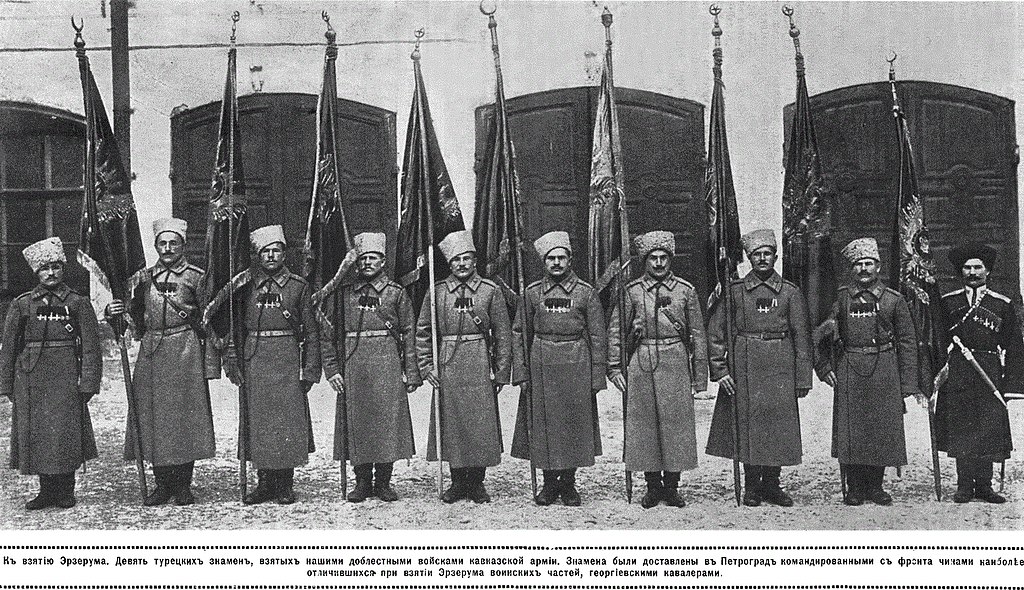
Russian victory at Erzurum in WWI weakens Ottomans, shifts power in Caucasus region.
Germany
Global Trade
Military
4 min read
Updated By: History Editorial Network (HEN)
Published:
Updated:
The Erzurum Offensive, part of World War I, marked a substantial victory for Russian forces in the Caucasus region. The Russian Army, aiming to capitalize on weakened Ottoman defenses, launched a well-coordinated assault on the fortress city of Erzurum. The offensive began with a concentrated artillery barrage, succeeded by infantry advances. Harsh winter conditions and mountainous terrain added to the complexities faced by both sides.
Russian forces, under General Yudenich, effectively utilized superior artillery firepower and strategic planning. The Ottoman forces, though fortified, were inadequately supplied and suffered from logistical difficulties. The Russian troops, numbering approximately 130,000, managed to outflank the Ottoman positions, leading to significant territorial gains.
The capture of Erzurum, a vital strategic and logistical center, substantially weakened Ottoman control in the region. This defeat forced the Ottomans to withdraw further into Anatolia, impacting their overall strategic positioning in the Caucasus front. The victory at Erzurum not only bolstered Russian morale but also disrupted Ottoman defensive lines, contributing to the broader objectives of the Entente Powers.
The Erzurum Offensive resulted in approximately 13,000 Ottoman soldiers killed, with many more wounded or taken prisoner. On the Russian side, casualties numbered around 25,000. The fall of Erzurum had immediate and far-reaching consequences, as it marked one of the significant turning points in the Caucasus campaign. The operation demonstrated the importance of effective artillery use and highlighted critical supply issues faced by the Ottoman Empire.
#ErzurumOffensive #WorldWarI #MoofLife #CaucasusCampaign #RussianVictory #OttomanEmpire #MilitaryHistory #WarTactics
Primary Reference
Ottoman Empire/Middle East

Explore the Life Moments of
 AI Twin