RMS Lusitania Sinking Shapes World War I Opinion
Germany
Political
Global Trade
4 min read
Updated By: History Editorial Network (HEN)
Published:
Updated:
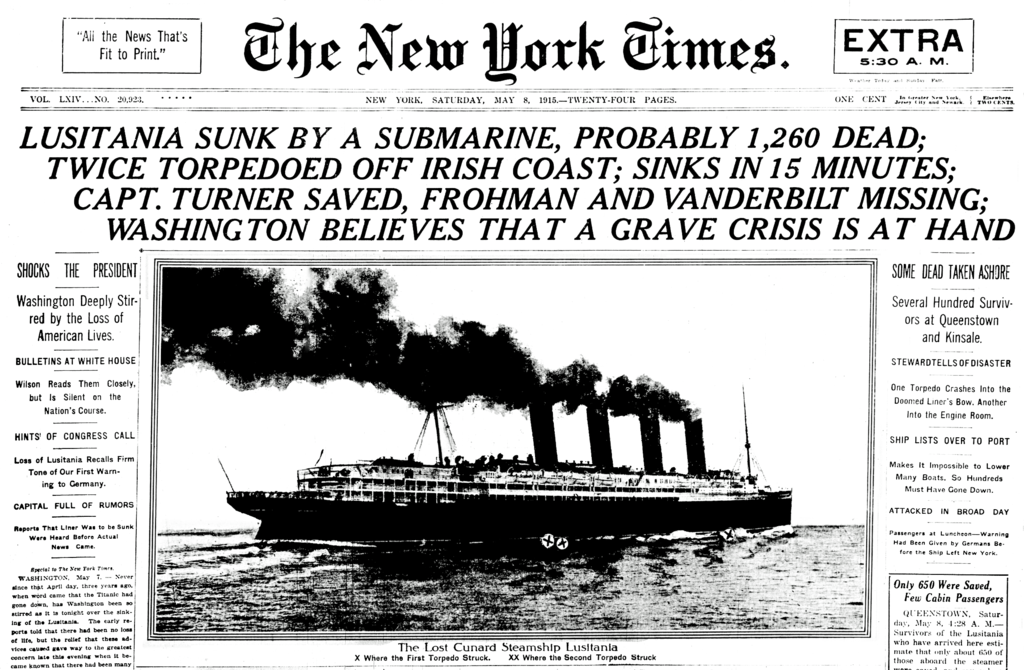
The RMS Lusitania, a British ocean liner, was torpedoed and sunk by a German U-boat off the coast of Ireland. This incident resulted in the deaths of 1,198 civilians, including 128 Americans. The sinking of the Lusitania played a pivotal role in shaping public opinion during World War I. At the time, Germany had declared the waters around the British Isles a war zone and warned that their U-boats might sink ships entering the area. Despite these warnings, the Lusitania departed from New York to Liverpool.
The loss of American lives among the casualties greatly intensified anti-German sentiment within the United States. The German rationale for the attack was based on the belief that the Lusitania was carrying munitions intended for Britain. Investigations after the incident confirmed that the ship was loaded with war materials, but the heavy civilian toll overshadowed these findings.
The international outcry that followed the sinking of the Lusitania put considerable pressure on the German government and led to substantial diplomatic fallout. In the United States, the incident shifted public opinion, which had largely favored neutrality. It became a critical factor in the U.S. decision to join the war later on.
In the broader context of the war, the sinking highlighted the destructive potential of submarine warfare and contributed to the unfolding global conflict's escalating nature. The event was widely publicized and used in Allied propaganda to draw more support for the war effort.
#WorldWarI #Lusitania #USHistory #NavalWarfare #WarAtSea #MoofLife
Primary Reference
How the Sinking of Lusitania Changed World War I | HISTORY

Explore the Life Moments of
 AI Twin