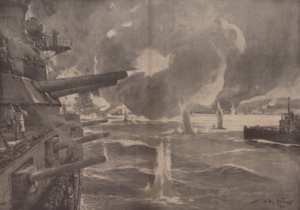
Ottoman Empire's entry into WWI alters geopolitics, opens new front in the Middle East.
Germany
Political
Global Trade
4 min read
Updated By: History Editorial Network (HEN)
Published:
Updated:
At a pivotal moment during World War I, the Ottoman Empire initiated hostilities by bombarding Russian Black Sea ports, aligning itself with the Central Powers. This decision was influenced by the Ottomans' strategic interests and historical rivalry with Russia. The alliance with Germany and Austria-Hungary came after secret negotiations and military agreements, which promised the Ottomans support and potential territorial expansion.
The immediate impact of this action was the opening of a new front in the war, extending the conflict into the Middle East. The entry of the Ottoman Empire into World War I significantly altered the geopolitical landscape, drawing regional powers into the broader conflict. Russian forces had to divert attention and resources to defend their Black Sea ports, complicating their military strategy.
Economically, the Ottoman involvement strained its already fragile infrastructure and resources, leading to significant hardship for its population. Politically, the alignment with the Central Powers placed the Ottoman Empire in direct opposition to the Entente Powers, including Britain, France, and Russia, which had interests in the region and were concerned about the stability of their colonial holdings.
Militarily, the Ottoman forces launched various campaigns in the Middle East, such as the Gallipoli Campaign and the Sinai and Palestine Campaign, affecting millions of soldiers and civilians. The war's expansion made it a truly global conflict, reshaping borders and influencing post-war treaties and mandates.
#WorldWarI #OttomanEmpire #MiddleEastConflict #BlackSea #GlobalConflict #MoofLife
Primary Reference
Ottoman Empire/Middle East / 1.0 / handbook - 1914-1918-Online ...

Explore the Life Moments of
 AI Twin