German Naval Mutiny Sparks Revolutionary Movement
Germany
Political
Revolution
4 min read
Updated By: History Editorial Network (HEN)
Published:
Updated:
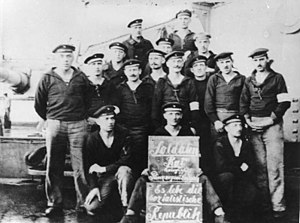
As World War I approached its end, the morale among German forces was critically low. Economic hardship, widespread hunger, and the continuous loss of life severely affected the German populace and military. Amid this turmoil, a critical incident occurred at the naval bases of Wilhelmshaven and Kiel. German sailors stationed there were ordered to embark on a final, large-scale offensive against the British Royal Navy. Understanding the futility and expecting catastrophic losses, the sailors refused to comply with the command.
The mutiny began at Wilhelmshaven with sailors showing outright defiance by declining to prepare for the battle. This act of rebellion quickly spread to the naval base at Kiel, where solidarity among the sailors reinforced the mutiny. The dissatisfaction stemmed from the grim reality faced by the sailors: inadequate supplies, poor living conditions, and the apparent lack of any strategic benefit from carrying out the attack. Reports from the period indicate that over 40,000 sailors and dockyard workers joined the uprising.
The mutiny at these naval bases tapped into broader discontent and acted as a catalyst for revolutionary activity across Germany. Encouraged by the sailors' stance, soldiers, and civilians began mass protests, demanding an end to the war and advocating for more democratic reforms. The revolutionary fervor continued to escalate, eventually leading to the abdication of Kaiser Wilhelm II and the establishment of the Weimar Republic.
This event marked a crucial turning point in German history. It illustrated the power of collective action in the face of unjust orders and highlighted the widespread desire for change among the German population. The scholars have since examined the mutiny as a critical incident that contributed significantly to the political transformations in post-war Germany.
#MoofLife #WWI #GermanRevolution #NavalMutiny #CollectiveAction #HistoricalImpact
Primary Reference
German revolution of 1918–1919 - Wikipedia
Explore the Life Moments of
 AI Twin