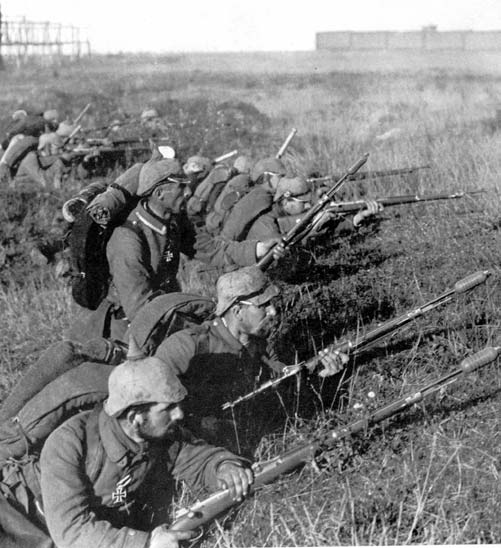
First Battle of the Marne: Turning point in WWI with Allied victory halting German advance.
Germany
Military
4 min read
Updated By: History Editorial Network (HEN)
Published:
Updated:
The First Battle of the Marne took place in northern France, where Allied forces managed to halt the German advance toward Paris. This engagement marked a crucial turning point on the Western Front during World War I. The German strategy aimed for a swift victory by quickly defeating France before turning east to confront Russia, a plan known as the Schlieffen Plan. German troops advanced deep into France, creating panic and preparing for the imminent capture of Paris.
However, the Allies, comprising British and French forces, regrouped and launched a counteroffensive along the Marne River. Significant coordination and rapid mobilization, including the use of Parisian taxis to transport troops to the front lines, allowed the Allies to stabilize their defenses and push back the German forces. After several days of intense fighting, the German forces were forced to retreat, abandoning their plan for a quick victory in the west.
Casualties in the battle were high on both sides, with the Allies suffering approximately 263,000 casualties and the German forces around 220,000. The failure of the German advance resulted in the establishment of trench warfare, leading to a prolonged and grueling stalemate on the Western Front that would last for several years.
This battle's outcome significantly altered the course of World War I, preventing the swift German victory and expanding the conflict. It exemplified the importance of strategic planning, coordination, and the resolve of the Allied forces in countering the German offensive.
#FirstBattleoftheMarne #WesternFront #AlliedVictory #WorldWarI #TurningPoint #MoofLife
Primary Reference
First Battle of the Marne - Wikipedia

Explore the Life Moments of
 AI Twin