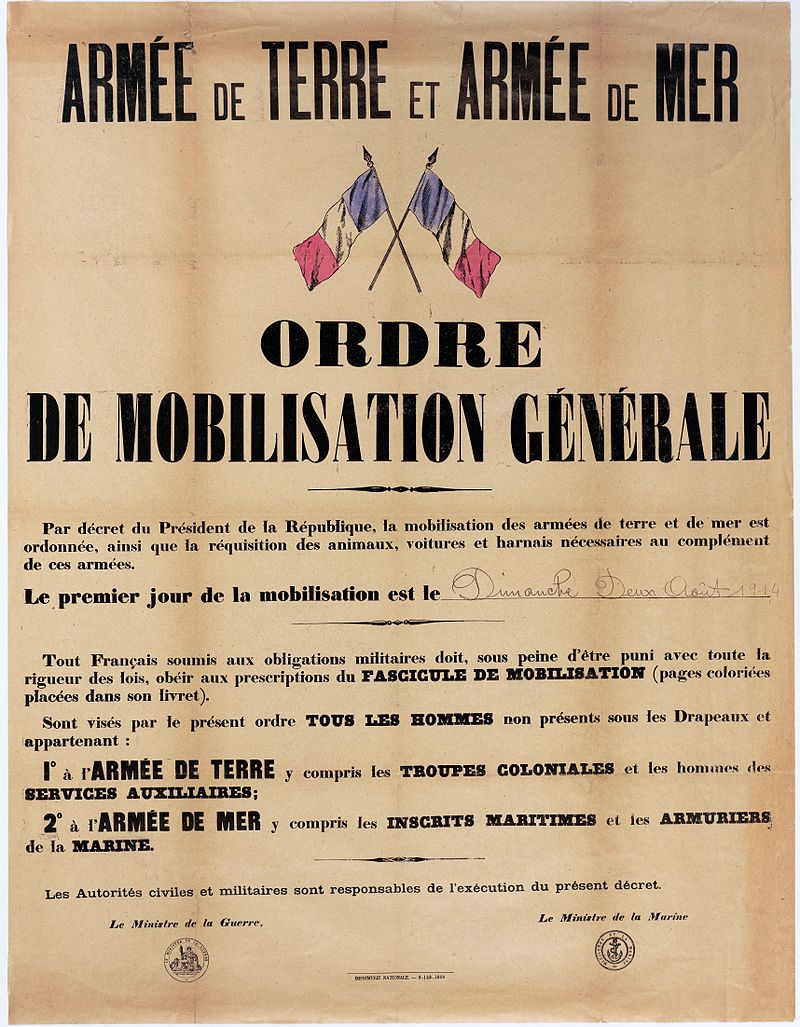
Europe on brink of war: Germany declares on France, sparking chain reaction in alliances.
Germany
Political
Global Trade
5 min read
Updated By: History Editorial Network (HEN)
Published:
Updated:
As tensions escalated across Europe, Germany declared war on France, citing France’s alliance with Russia and alleged French hostility. This development unfolded just days after Austria-Hungary declared war on Serbia, triggering a chain reaction among the major powers due to a complex network of alliances. Germany, bound by the Triple Alliance with Austria-Hungary and Italy, saw a need to support its ally and secure its position against the perceived threats from the Triple Entente, which consisted of France, Russia, and the United Kingdom.
The German leaders believed that a swift military campaign against France would eliminate one of their major adversaries, after which they could turn their full attention to the Eastern Front against Russia. This strategy, known as the Schlieffen Plan, called for a rapid victory over France by advancing through Belgium, which was neutral. The violation of Belgian neutrality would soon prompt the United Kingdom to enter the conflict, further complicating the geopolitical landscape.
The declaration of war on France signified a critical junction in the burgeoning global conflict. It mobilized millions of soldiers and initiated a series of battles that would lead to extensive loss of life and widespread destruction. Trench warfare emerged as a defining characteristic on the Western Front, resulting in a protracted and grueling stalemate.
Casualty statistics during the ensuing battles were staggering. The Battle of the Marne, which followed shortly after, resulted in approximately 500,000 combined casualties. These early encounters foreshadowed the brutal nature of the conflict ahead, with technological advancements in weaponry contributing to unprecedented levels of devastation.
The declaration also catalyzed significant social, economic, and political changes within participating nations. War economies began to take shape as resources were redirected towards the war effort, women entered the workforce in unprecedented numbers, and civilian populations faced shortages and hardship.
Germany’s declaration of war on France marked a decisive escalation towards full-scale global conflict, leading to years of relentless warfare that reshaped the international order. The reverberations of this act would be felt for decades to come, influencing the course of 20th-century history.
#WorldWarI #Germany #France #History #MoofLife
Primary Reference
The Armenian Allegation of Genocide: The issue and the facts ...
Explore the Life Moments of
 AI Twin