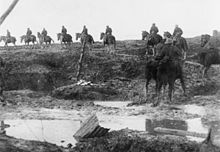
End of the Somme Offensive: Battle of the Ancre solidifies British control amidst significant casualties.
Germany
Warfare
Military
4 min read
Updated By: History Editorial Network (HEN)
Published:
Updated:
The Battle of the Ancre concluded with British forces maintaining control over captured positions, signifying the end of the Somme offensive as winter approached. The Somme offensive, a large-scale operation undertaken by the British and French armies against the German Empire, spanned several months and aimed to break through German defenses in the Somme region of France.
The Ancre phase, named after the Ancre River, took place in the final stages of the Somme campaign. British troops launched a series of assaults against German positions, enduring harsh conditions and fierce resistance. The offensive sought to alleviate pressure on the French forces at Verdun and inflict significant losses on the German Army.
By the end of the Battle of the Ancre, British forces succeeded in capturing and holding several key positions. This resulted in establishing a defensible front line as winter approached, which ultimately marked the conclusion of the lengthy and costly Somme offensive. Although the territorial gains were limited, the prolonged engagement inflicted considerable casualties on both sides, with estimates of total casualties exceeding one million soldiers. The battle exemplifies the war of attrition characteristic of World War I, wherein both Allies and Central Powers experienced monumental losses for relatively minimal strategic advances.
The end of the Somme offensive brought about a period of regroupment and consolidation for the British Army. It underscored the challenges of trench warfare and foreshadowed the protracted nature of the conflict that continued to evolve in the subsequent years.
#BattleOfAncre #SommeOffensive #WorldWarI #TrenchWarfare #MoofLife
Primary Reference
1918: spring offensive and advance to victory

Explore the Life Moments of
 AI Twin