Easter Rising: Declaration of Irish Republic & British Suppression in Dublin's Uprising
Germany
Political
4 min read
Updated By: History Editorial Network (HEN)
Published:
Updated:
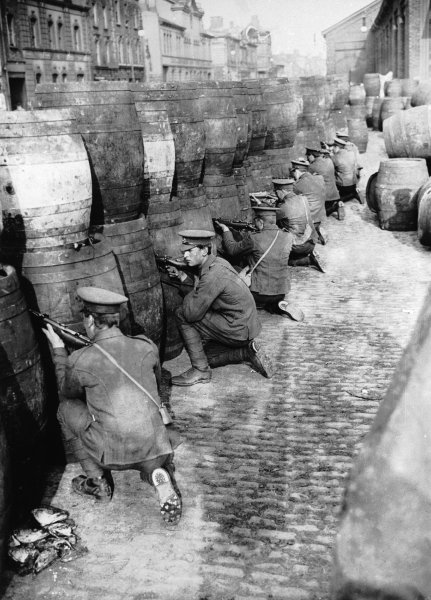
During the Easter Rising, Irish leaders formally declared an independent Irish Republic. This declaration marked a pivotal point in Irish history, encapsulating the aspirations for self-governance and freedom from British rule. The rebellion was initiated by a group of Irish republicans, including members of the Irish Republican Brotherhood and the Irish Volunteers, who sought to capitalize on British distractions due to World War I. The insurgents seized key locations in Dublin, including the General Post Office, where they read out the proclamation of independence.
British forces, swiftly mobilized, launched a counteroffensive to suppress the uprising. The British military response included deploying thousands of troops, artillery, and even naval bombardments to regain control of the city. Fighting lasted for about a week, resulting in significant casualties on both sides, with an estimated 485 deaths and over 2,600 wounded. The majority of those killed were civilians caught in the crossfire. The substantial damage to Dublin's infrastructure highlighted the intensity of the conflict.
The leaders of the rebellion were subsequently arrested, and many were executed, which fueled further nationalist sentiment across Ireland. This response generated widespread public sympathy for the cause of Irish independence, laying the groundwork for future political movements and leading to the eventual establishment of the Irish Free State.
The Easter Rising, though initially a military failure
Primary Reference
Ireland and World War I - Wikipedia
Explore the Life Moments of
 AI Twin