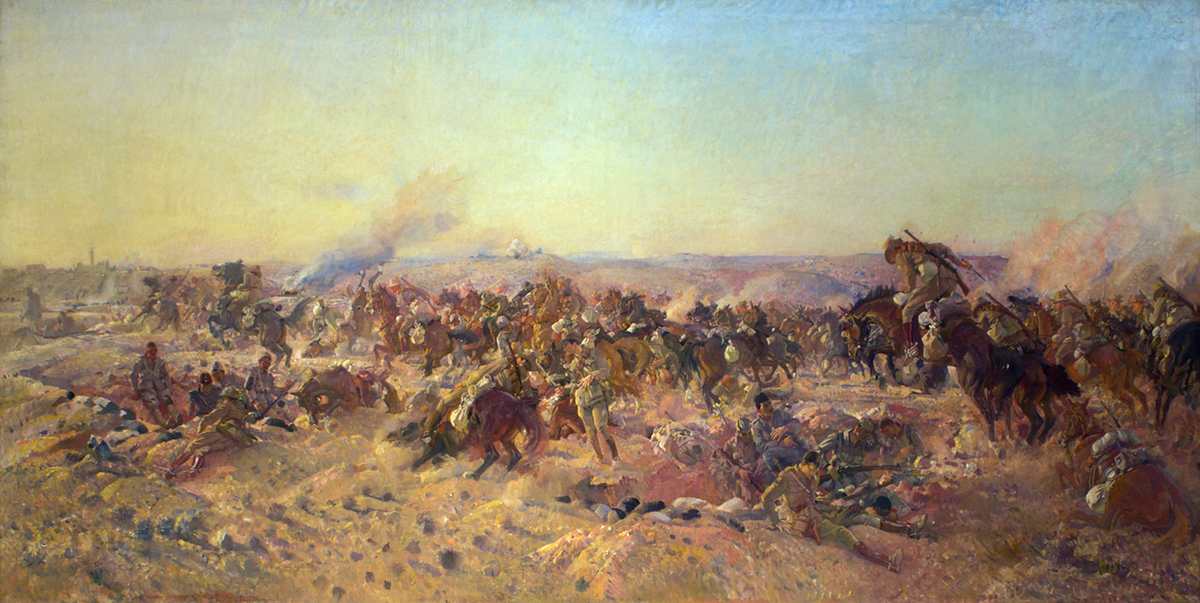
British capture of Beersheba in WWI: a pivotal victory for Allied forces in Palestine.
Germany
Political
Military
4 min read
Updated By: History Editorial Network (HEN)
Published:
Updated:
The British capture of Beersheba in Palestine was a pivotal event during World War I, marking the beginning of a successful Allied offensive against the Ottoman Empire. Beersheba, a strategic location, was well-defended by Ottoman forces, making its capture crucial for the advancement of Allied troops in the region.
The offensive, spearheaded by the British Egyptian Expeditionary Force and led by General Edmund Allenby, involved meticulous planning and execution. The key to the operation was the deployment of cavalry, particularly the Light Horse regiments. The British forces managed to outmaneuver the Ottoman defenders by conducting a surprise attack on the fortified town, avoiding the heavily defended Gaza front.
Over 50,000 Allied troops were involved in the campaign, with approximately 800 casualties. The Ottoman forces, numbering around 1,000, suffered significant losses, and many were taken as prisoners of war. The success at Beersheba effectively broke the Ottoman defensive line, allowing the British to push further into Palestine.
The capture of Beersheba had a profound impact on the Middle Eastern theater of World War I. It opened the route for the subsequent battles in the region, eventually leading to the fall of Jerusalem, which was a significant strategic and symbolic victory for the Allies. The campaign demonstrated the effective use of combined arms operations, including infantry, cavalry, and artillery.
This victory marked a turning point in the Sinai and Palestine Campaign, contributing to the eventual collapse of Ottoman control in the region. It also showcased the strategic importance of logistics and surprise in military operations, lessons that would influence future conflicts.
#Beersheba #WorldWarI #WWI #BritishArmy #MilitaryHistory #MiddleEastCampaign #MoofLife
Primary Reference
Egypt and Palestine campaign | National Army Museum
Explore the Life Moments of
 AI Twin