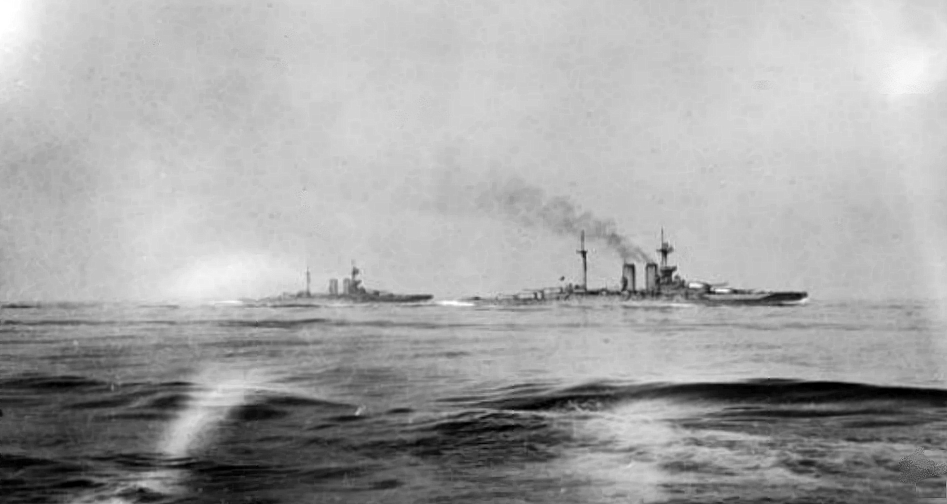
Battle of Jutland: Decisive naval clash in WWI with heavy casualties and strategic consequences.
Germany
Military
4 min read
Updated By: History Editorial Network (HEN)
Published:
Updated:
The Battle of Jutland commenced in the North Sea between the British Royal Navy’s Grand Fleet and the German High Seas Fleet. It was the only major naval confrontation of World War I. The British Grand Fleet, commanded by Admiral Sir John Jellicoe, sought to maintain naval supremacy and enforce a blockade to restrict German maritime movements. Opposing them, the German High Seas Fleet, led by Vice-Admiral Reinhard Scheer, aimed to break this blockade and challenge British dominance.
Strategically, the encounter was crucial for both sides. The British fleet consisted of 151 warships, including 28 battleships, while the German fleet comprised 99 warships with 16 battleships. The battle unfolded in a series of engagements over 36 hours, involving complex maneuvers and exchanges of heavy fire.
Casualties were extensive, with the British losing 14 ships and over 6,000 personnel, and the Germans losing 11 ships and around 2,500 personnel. Despite the heavy losses, the outcome did not lead to a decisive victory for either side. The British fleet maintained control of the North Sea, continuing the blockade of Germany. Conversely, the High Seas Fleet withdrew, limiting its future surface fleet actions for the remainder of the war.
The battle highlighted the strategic significance of naval power during the conflict and influenced subsequent naval engagements and strategies. Ship design, tactics, and naval policy were reassessed by both navies based on the battle's outcomes and experiences.
#MoofLife #WorldWarI #NavalWarfare #BattleOfJutland #BritishNavy #GermanNavy #NavalBlockade #MilitaryStrategy
Primary Reference
Battle of Jutland - Wikipedia

Explore the Life Moments of
 AI Twin