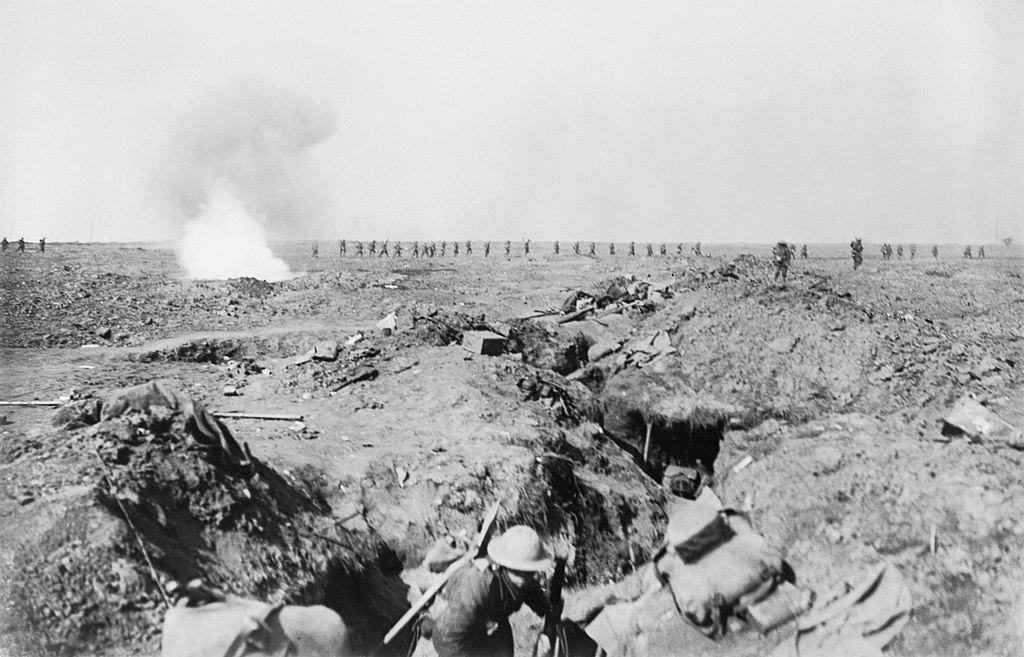
Battle of Ginchy: Irish forces capture village, securing strategic gain at high cost.
Germany
Military
4 min read
Updated By: History Editorial Network (HEN)
Published:
Updated:
The Battle of Ginchy occurred during the larger Battle of the Somme, which was one of World War I's most significant and brutal conflicts. The village of Ginchy, located in northern France, was of strategic importance to both the Allied and Central powers, lying within a heavily contested region.
Irish troops, notably the 16th (Irish) Division, played a crucial role in this engagement. They were tasked with capturing Ginchy, a village that had changed hands multiple times during the course of the battle. Leading into the attack, the Irish soldiers faced heavily fortified German positions, extensive barbed wire defenses, and machine-gun nests. Despite these formidable obstacles, the division pressed forward with determination.
The capture of Ginchy marked a small yet impactful gain for the Allies in the overall context of the Battle of the Somme. It provided a tactical advantage by securing higher ground and disrupting German defensive lines. The operation, however, came at a substantial cost. The Irish troops suffered significant casualties in the process, reflective of the high human cost of World War I battles.
Statistics from the battle show that many soldiers lost their lives or were wounded in the fierce fighting that characterized this phase of the campaign. Nevertheless, the successful capture of Ginchy by the Irish forces exemplified the persistence and sacrifice of the soldiers involved.
As a result, Ginchy remains etched in history as a testament to the strategic efforts and intense struggles faced by the Allied forces during the Battle of the Somme.
#WWI #BattleOfTheSomme #IrishDivision #MilitaryHistory #MoofLife

Explore the Life Moments of
 AI Twin