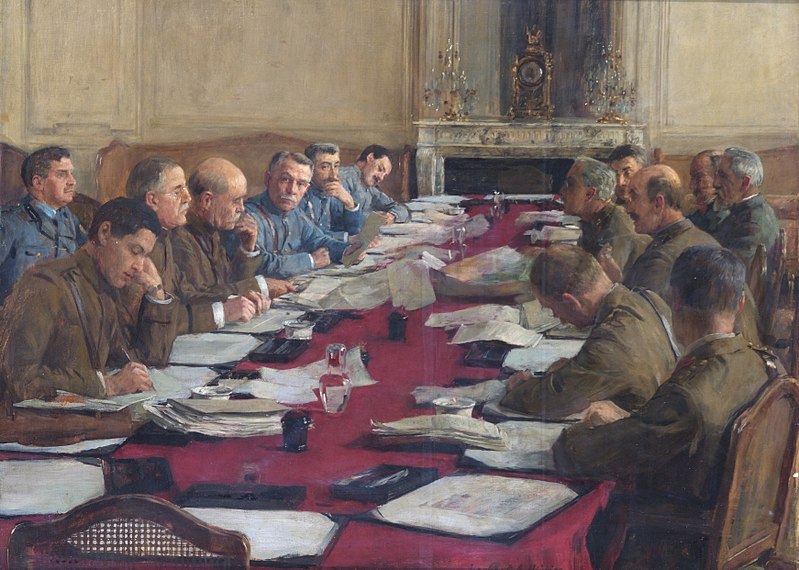
Allied Supreme War Council: Streamlining strategy, coordination, and cooperation during World War I.
Germany
Political
4 min read
Updated By: History Editorial Network (HEN)
Published:
Updated:
In the midst of World War I, the need for better coordination among the Allied nations became evident. France, Britain, Italy, and the United States established the Allied Supreme War Council to address this concern. This formation aimed to streamline military strategy among the major Allied powers, fostering a unified approach to their war efforts.
The council consisted of representatives from each of the participating nations, including military leaders and political figures. Its primary objective was to ensure that all military actions were synchronized, eliminating the fragmented approach that had previously plagued the Allied campaigns. Prior to the formation of the council, the lack of a cohesive strategy often resulted in overlapping efforts and miscommunications, which in turn, weakened their position against the Central Powers.
One of the critical roles of the Allied Supreme War Council was to facilitate communication and joint planning. This improved the anticipation of enemy moves, coordinated offensive initiatives, and ensured resource sharing. For instance, the council played a pivotal role in organizing the joint operations that defined the latter stages of the conflict, such as the Hundred Days Offensive, which eventually led to the armistice.
The establishment of the council also had significant implications for how resources, troops, and information were managed. It marked a shift from national-centric strategies to a more integrated and cooperative approach. This change not only improved the efficiency of military operations but also reinforced the solidarity among the Allied nations in their pursuit of a common goal.
#MoofLife #WorldWarI #AlliedSupremeWarCouncil #MilitaryStrategy #Cooperation
Primary Reference
Command and Control: The Essence of Coalition Warfare
Explore the Life Moments of
 AI Twin