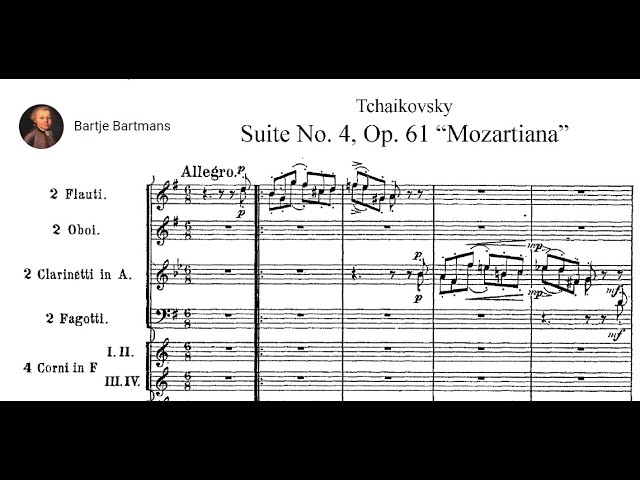
Tchaikovsky's "Mozartiana": Tribute to Mozart with Orchestral Richness and Innovative Adaptation.
Moscow, Russian Federation
Entertainment
Music
5 min read
Updated By: History Editorial Network (HEN)
Published:
Updated:
Pyotr Ilyich Tchaikovsky composed Orchestral Suite No. 4 in G major, Op. 61, known as Mozartiana, in August 1887 as a tribute to Wolfgang Amadeus Mozart, marking the centenary year of Mozart’s opera Don Giovanni, which premiered in 1787. Tchaikovsky, who frequently expressed admiration for Mozart in his personal correspondence, selected a set of lesser-known works and re-orchestrated them for a full symphony orchestra. His aim was to preserve the structure and character of the original pieces while presenting them through the tonal richness and expressive range of late 19th-century orchestration.
The suite is structured in four movements, each derived from Mozart’s compositions. The opening Gigue is based on Mozart’s Gigue in G major, K. 574, originally written for piano. It is followed by Menuet, adapted from Minuet in D major, K. 355, which retains a measured and balanced form. The third movement, Preghiera (Prayer), is drawn from Franz Liszt’s piano transcription of Mozart’s Ave verum corpus, K. 618, giving the suite a solemn and reflective character. The final movement, Theme and Variations, is based on Mozart’s Variations on “Unser dummer Pöbel meint,” K. 455, and expands into a large orchestral sequence where Tchaikovsky explores a range of textures, dynamics, and instrumental combinations.
The Theme and Variations movement stands out for its structural scale and orchestral detail. Tchaikovsky transforms the original piano-based variations into a symphonic form, distributing melodic lines across different sections of the orchestra while maintaining clarity of the theme. This approach demonstrates his skill in orchestration, particularly in balancing complexity with transparency. The movement builds progressively, culminating in a richly layered conclusion that highlights both Mozart’s thematic material and Tchaikovsky’s compositional voice.
The work premiered on 26 November 1887 in Moscow, conducted by Tchaikovsky himself. Unlike his earlier orchestral suites, which included original compositions, Mozartiana is entirely based on pre-existing material by Mozart. Its continued presence in the orchestral repertoire reflects its role as both a historical homage and a reinterpretation that connects 18th-century Classical style with late Romantic orchestral practice.
Primary Reference
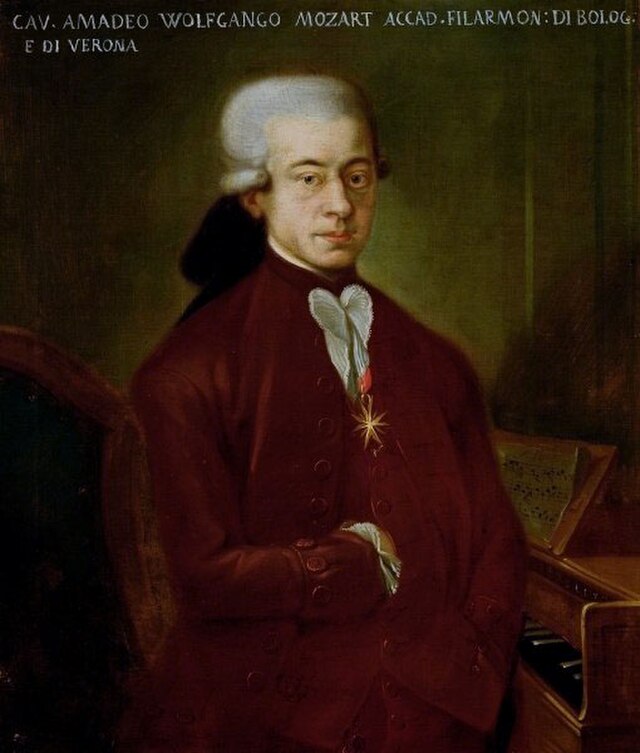
Wolfgang Amadeus Mozart
Explore the Life Moments of
 AI Twin