Musical Prodigy: Wolfgang Amadeus Mozart's Enduring Legacy in Classical Music
Salzburg and Vienna, Austria
Entertainment
Music
4 min read
Updated By: History Editorial Network (HEN)
Published:
Updated:
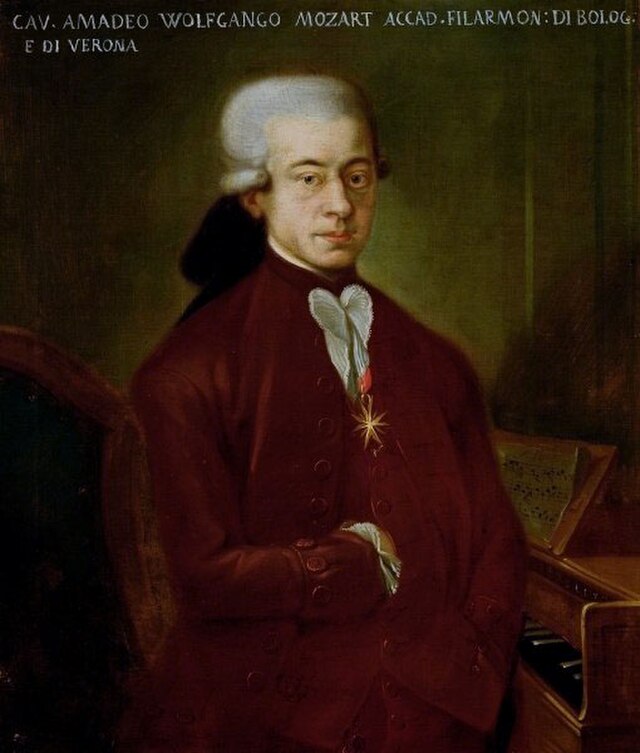
Wolfgang Amadeus Mozart (27/01/1756 – 05/12/1791) was an Austrian composer of the Classical period whose career spanned just 35 years yet produced more than 600 completed works. Born in Salzburg to Leopold Mozart, a court musician and teacher, Mozart demonstrated musical ability in early childhood. By age five he was composing short keyboard pieces recorded in the Nannerl Notenbuch, and by six he was performing before European courts. Between 1763 and 1766, he toured extensively with his family across Germany, France, England, and the Netherlands, gaining exposure to diverse musical styles and audiences.
During the 1770s and 1780s, Mozart developed into a mature composer working across multiple genres, including opera, symphony, chamber music, sacred music, and piano concertos. His major operatic works include Le nozze di Figaro (1786), Don Giovanni (1787), and Die Zauberflöte (1791). He also composed symphonies such as the final trilogy in 1788, numerous piano concertos written for his own performances in Vienna, and sacred works including the unfinished Requiem in D minor at the end of his life. Mozart spent his final decade largely in Vienna, working as a freelance composer, performer, and teacher.
Mozart died in Vienna on 05/12/1791 at the age of 35. His surviving catalogue, later organized by Ludwig von Köchel, lists more than 600 compositions across nearly every major genre of the late eighteenth century. His works remained in performance after his death and became central to concert and operatic repertory.
Why This Moment Matters
Mozart’s life from 1756 to 1791 produced a large body of compositions across opera, symphony, chamber music, and sacred works within a comparatively short career.
#Mozart
#ClassicalPeriod
#MusicHistory
#WolfgangAmadeusMozart
#ClassicalMusic
Primary Reference
Mozart's Birthplace: Sightseeing Attractions : salzburg.info
Explore the Life Moments of
 AI Twin