Mozart's Freemason Influence in Vienna: A Path to Intellectual Growth and Musical Success
Vienna, Austria
Art
Movements
Music
4 min read
Updated By: History Editorial Network (HEN)
Published:
Updated:
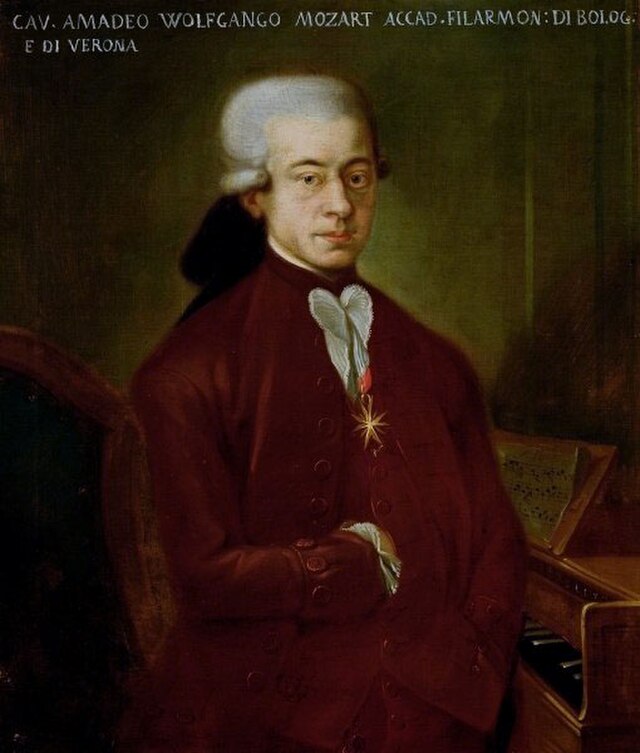
On 14/12/1784, Wolfgang Amadeus Mozart was initiated as an Entered Apprentice into the Viennese Masonic lodge “Zur Wohltätigkeit” (Beneficence). At the time, Mozart was living in Vienna and actively performing, teaching, and composing. Lodge documentation indicates that he advanced quickly through the Masonic ranks, becoming a Fellow Craft on 07/01/1785 and later that year being raised to the degree of Master Mason. His involvement placed him within a network of Viennese intellectuals, musicians, and officials who participated in lodge meetings, ceremonies, and musical performances.
Following his initiation, Mozart composed several works associated directly with Masonic functions. These include Die Maurerfreude, K. 471, written in 1785 for a lodge celebration honoring Ignaz von Born, and Maurerische Trauermusik (Masonic Funeral Music), K. 477, composed the same year for a memorial observance for deceased lodge members. Later, near the end of his life, he completed Eine kleine Freimaurer-Kantate, K. 623, dated 15/11/1791, for the dedication of a Masonic lodge in Vienna. These compositions typically feature choral writing and ceremonial pacing suited to lodge events.
Masonic themes also appear in Mozart’s theatrical works, most notably Die Zauberflöte, which premiered on 30/09/1791. The opera incorporates scenes of initiation, temple settings, and recurring symbolic groupings. Mozart’s participation in Freemasonry from December 1784 onward coincided with a period of major compositions in Vienna, and his lodge activities continued until the final year of his life.
Why This Moment Matters
The initiation on 14/12/1784 introduced Mozart to a social and cultural network that influenced both ceremonial compositions and symbolic elements in his later operatic works.
#Mozart
#Freemasonry
#ClassicalMusic
#MusicHistory
#DieZauberflote
Primary Reference
Here's a side to Mozart you probably didn't know
Explore the Life Moments of
 AI Twin